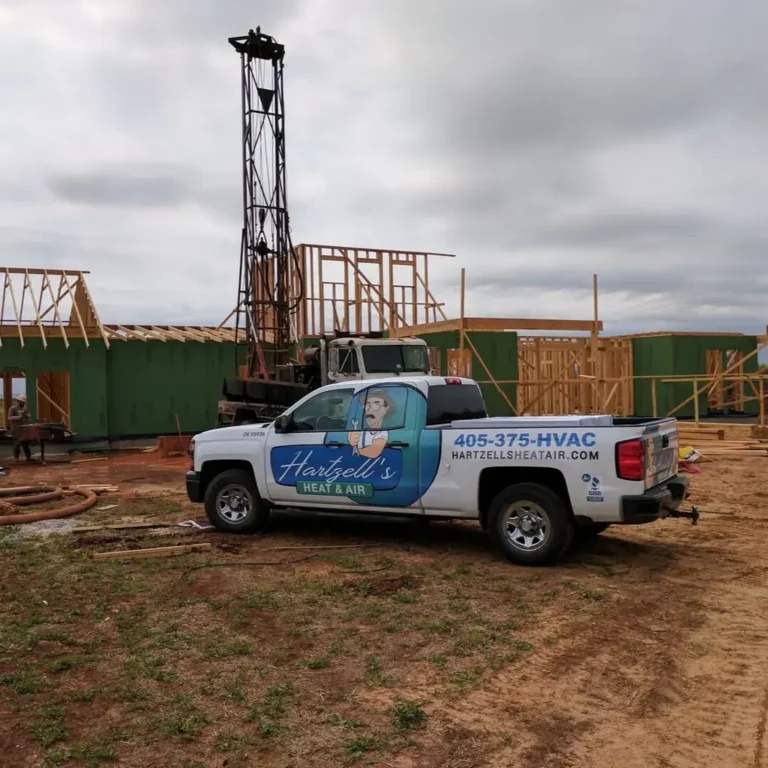
The loop field fits under your parking lot.
You already own the land the system needs. We drill the bores where you park, set the loops, put the surface back, and the equipment lives inside the building where hail and copper thieves cannot get to it.
4.8 stars, 300+ Google reviews · IGSHPA Accredited · ClimateMaster GeoElite · Free Saturday and Sunday consultation
Your lot is the cheapest ground you will ever drill
A commercial bore field does not need a field. It needs depth, and depth is straight down under whatever is already there. On most of the buildings I look at, the parking lot, the drive or the side yard is the loop field, and the building never loses a parking space once we are done.
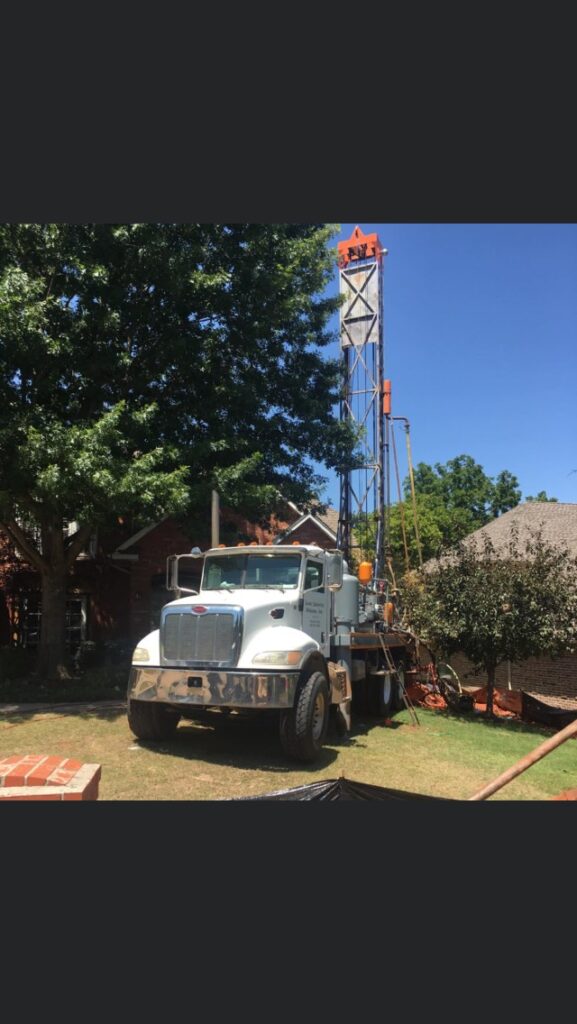
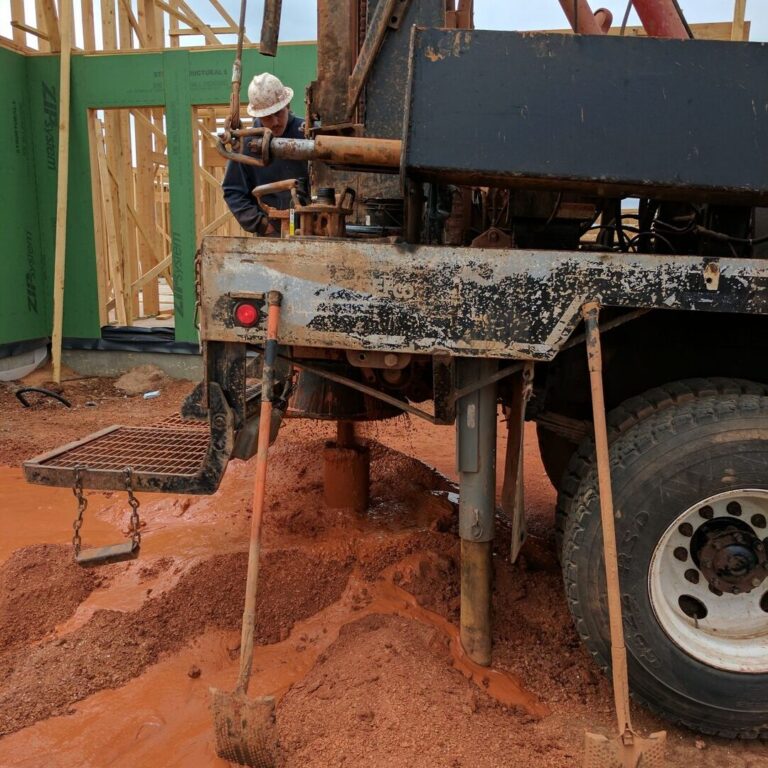
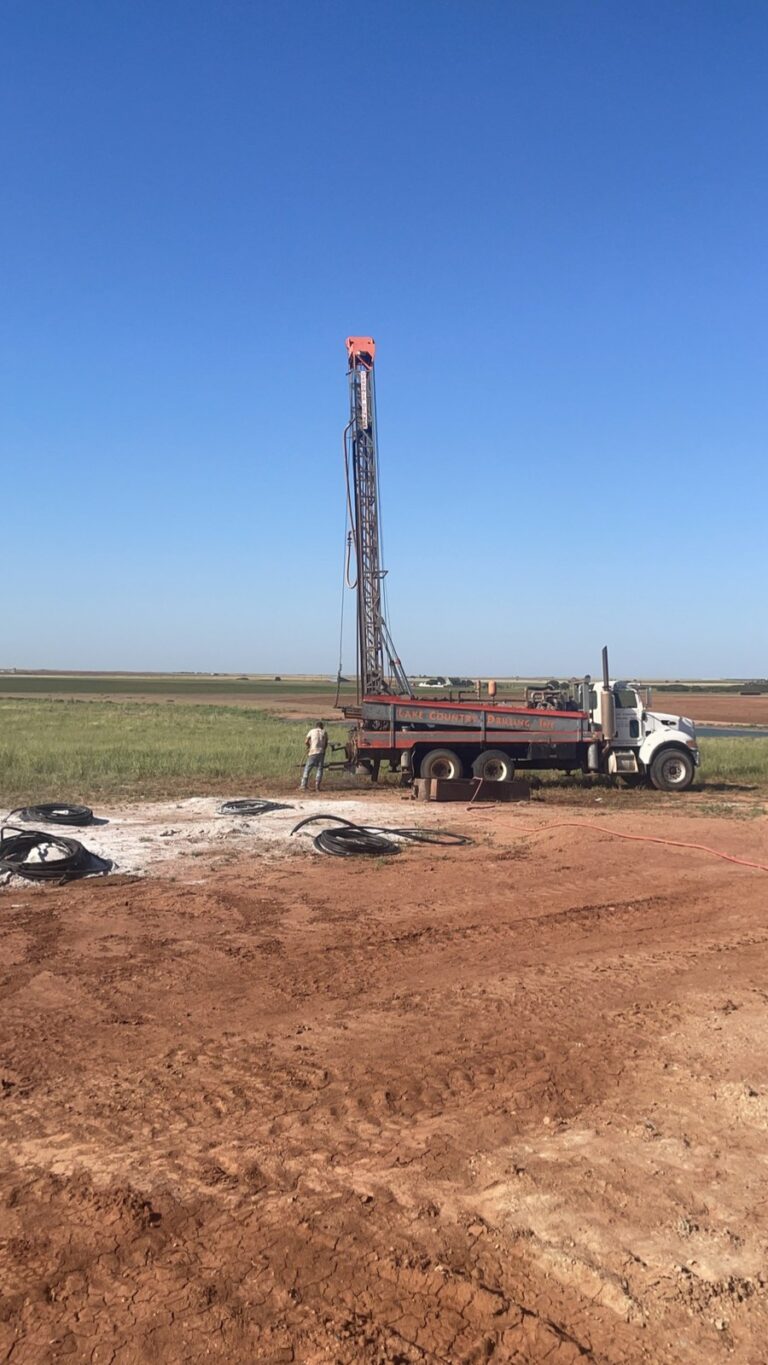
- We drill where you already parkVertical bores, a few hundred feet each, tied into a common header. The header trench runs to the mechanical room.
- The surface comes off and goes backSaw cut, drill, set and grout the loops, pressure test, backfill, then patch the surface over the work.
- Nothing outside to wreckNo rooftop units cooking in August sun, no condensers to hail-dent or strip for copper. The machinery is indoors.
- Loop life in decadesA properly installed and pressure-tested loop is rated 25 to 50 years and more. You are not re-buying it on a normal replacement cycle.
- Quiet where it countsThe noise is in a mechanical room, not outside a classroom window or a patient room.
- Per zone control at scaleWater source heat pumps let a gym, a server closet and an office wing run their own setpoints instead of fighting one air handler.
The homeowner credit died. The commercial one did not.
This is the part building owners get wrong, because they read a headline about tax credits ending and assume it covered them. It did not. Commercial and institutional geothermal heat pump property still sits under Section 48, it was left out of the fast phaseouts that hit solar and wind, and construction has to begin before 2035.
- 6 percent is the baseThat is the starting rate on qualifying geothermal heat pump property, and it holds through 2032 before it steps down.
- 30 percent is the real number for most buildings hereThe rate steps up when the project meets prevailing wage and apprenticeship requirements during construction, or when the system is under one megawatt. Most Oklahoma buildings I look at are the second one.
- Two bonuses of 10 percent eachDomestic content, which is the American steel and American made equipment question, and energy community siting. Stacked on top, that is where the 50 percent ceiling people quote comes from.
- Tax exempt owners are not shut outSchools, cities, churches and non-profits can take the value as a cash refund through elective pay, with registration and filing rules that your finance office handles.
Depreciation is the second mechanism and it is not the credit. A commercial geothermal system carries a depreciation schedule of its own, and how that interacts with the credit belongs to your accountant, not to a contractor with a spreadsheet. If you are an agricultural or rural business there is also a separate USDA grant program that has nothing to do with Section 48, and I can point you at it without pretending to administer it.
I am an HVAC contractor, not your CPA. I will tell you how the system is built and what it costs. Your tax professional confirms what qualifies for your project and what lands in the eligible basis.
What the credit covers, and what your CPA decides
I get asked this on every commercial walk through, usually by an owner whose lot is already cracked up: does the new parking lot come out of the credit? Here is the straight version, because I would rather you hear it from me than from your accountant after the fact.
- The loop field is part of the systemDrilling, grouting, the loops, the headers and the manifolds are normally treated as part of the energy property, not as site work. The common mistake that costs owners money is the opposite one: a contractor books those costs so loosely that the basis gets lost.
- Putting the surface back is a judgment callRestoring the cut over the bores and the header trench is part of finishing the install. Whether it lands in the eligible basis is a question for the person signing your return, and there is no published rule that settles it.
- A whole new lot is usually an improvement to your propertyIf the lot was already broken and you were going to repave it anyway, that is normally a land improvement, not a cost of installing equipment. That is the weakest version of the argument, not the strongest.
- What I will not doTell you the credit pays for your parking lot. Anyone who promises that is spending money that belongs to your CPA’s judgment.
The way to settle it is a cost segregation study on your actual project, which your accountant orders and which splits every cost into the right bucket. I will give them the scope, the invoices and the loop design in whatever detail they want.
If you can use the credit, buy it
Buy the system
You own the equipment, you hold the depreciation, and the Section 48 credit is yours to claim. For a taxpaying business with a real project, this is almost always the right side of the line.
Credit stays with youBuy with elective pay
A tax exempt owner takes the credit value as a cash refund instead of a reduction in tax. Your finance office registers the project before filing.
Cash instead of taxThe Comfort Plan lease
Palmetto’s Geothermal Comfort Plan is a ten year lease with nothing upfront, and it caps at $200,000 a project. Under a lease Palmetto owns the equipment, so Palmetto claims the federal credit, not you.
Lease, not a loanHow the Comfort Plan worksCanon on the lease: it is written as a residential program, and I am confirming with Palmetto whether any commercial building qualifies at all. Until I have that in writing, treat the lease as the residential path and the purchase as the commercial one.
One ton to two thousand tons
A one ton system for a small office is the same discipline as a two thousand ton system for a district, just less of it. What changes at scale is the loop design and how much load calculation the job deserves.
- Schools and campusesDistrict scale heating and cooling with per zone control a boiler and chiller plant cannot match, and no rooftop units baking on a gym roof.
- Hospitals and clinicsQuiet, steady, redundant capable systems for buildings where temperature and humidity are not optional.
- Municipal and governmentCity halls, libraries, fire stations, water treatment buildings. A tax exempt owner’s incentive path runs through elective pay.
- ChurchesA sanctuary that sits empty six days and packed on Sunday needs a system that handles swing load without running full tilt all week.
- Offices and retailPredictable comfort, low mechanical noise, and nothing on the roof for a storm to chew up.
- Agricultural and industrialProcess cooling, dehumidification and conditioned work space where the load looks nothing like a house.
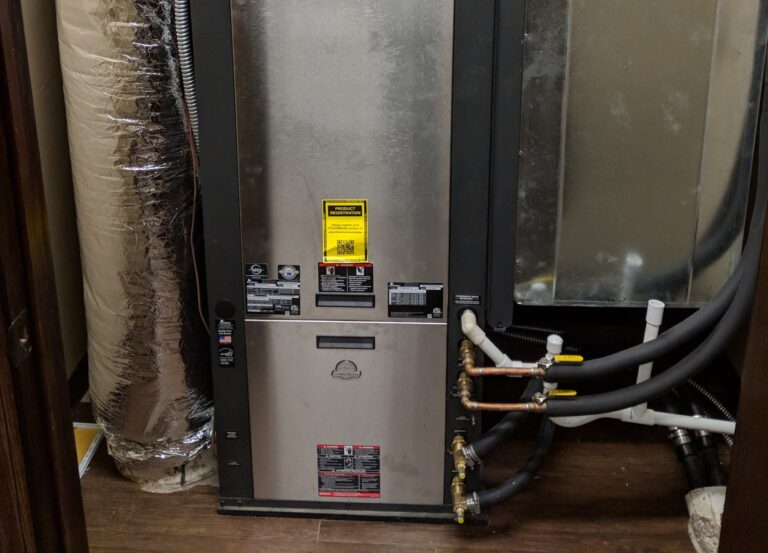
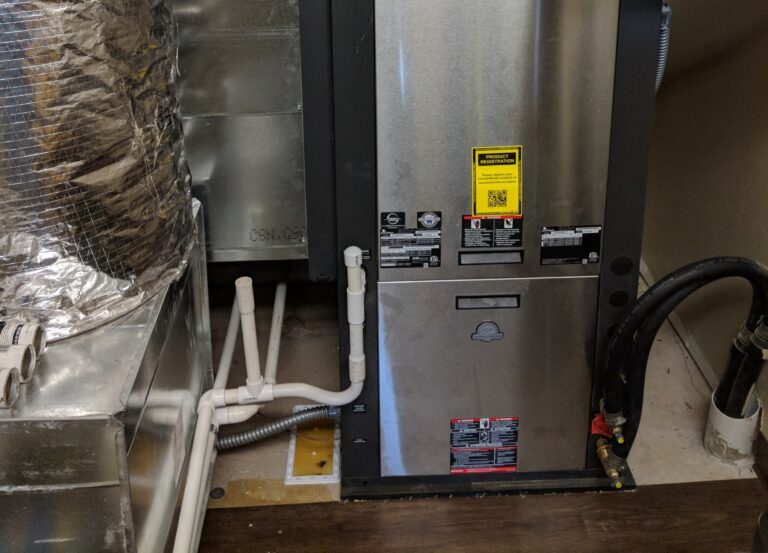
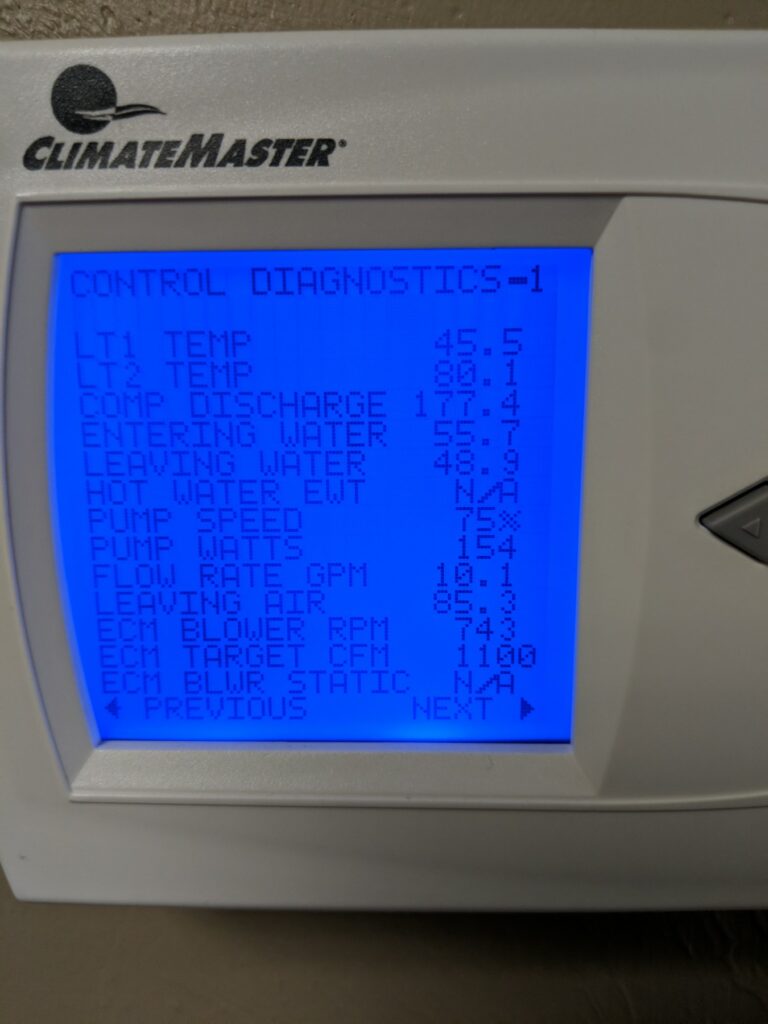
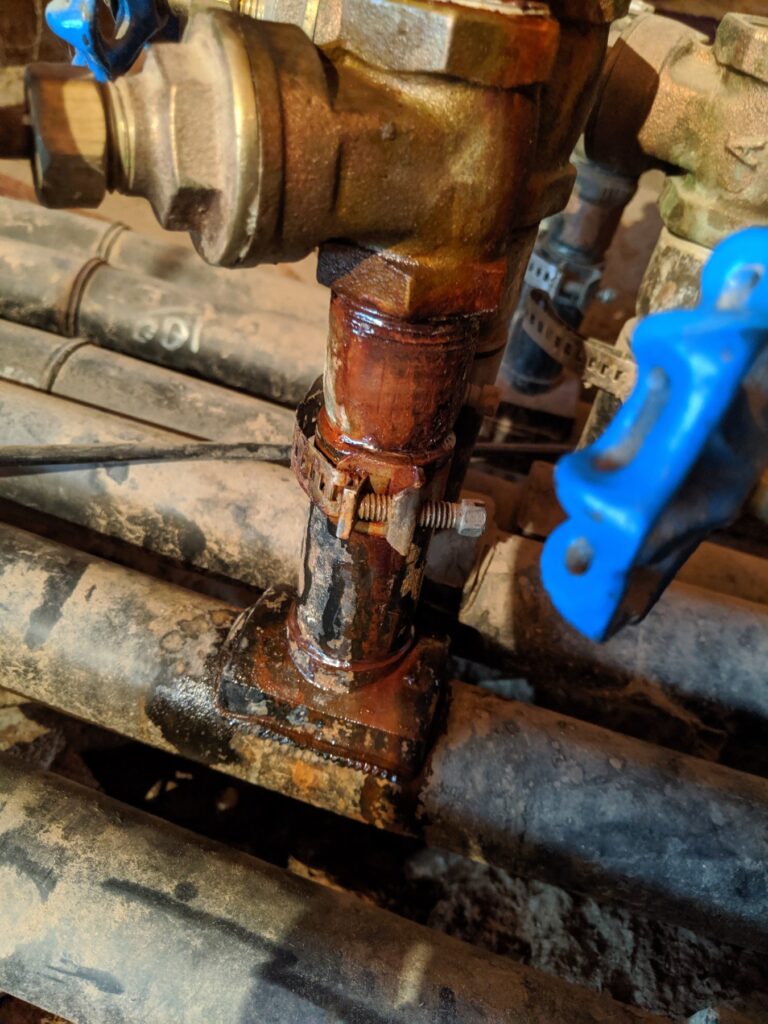
The loop is where the engineering time goes
- Vertical bore fieldsThe standard answer on a tight site or a campus. Multiple bores tied into a common header, sized to your measured peak load. An undersized bore field is the single most common commercial geothermal failure I get called out to inherit.
- Pond loopsIf you have a pond or a deep enough retention feature, a closed pond loop moves serious heat without drilling. Depth is the gating spec. I am engineering a pond loop right now for a large Oklahoma metal fabrication shop using two on site ponds instead of a bore field.
- Standing column wellsWhere the geology supports it, water circulates through the well itself rather than a sealed loop. It depends entirely on the aquifer and on water rights, and not every site qualifies.
Geothermal is statewide for me, not a Kingfisher only service. I bring the load calculation and the loop design and coordinate the drilling wherever the building is, so you manage one contractor instead of three.
Six steps, documented at each one
- Load calculationReal heating and cooling load for your building, not a square footage guess. Every decision after this one depends on it.
- Geology and site assessmentSoil and rock, available ground, pond depth if a pond is on the table, water rights if a standing column is.
- Loop and bore field designEngineered to your load and documented before anyone drills. This is the step other shops skip, and it is why I get called to fix their bore fields.
- Drilling and civil coordinationI coordinate the drilling and the surface work so you manage one contractor, not three.
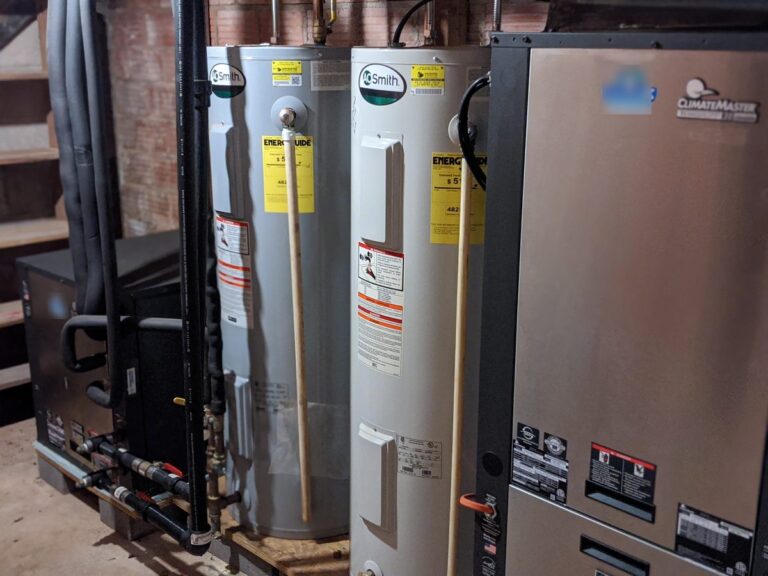
- Equipment installClimateMaster commercial water source heat pumps, staged and distributed to match your zoning plan.
- Commissioning and documentationLoop pressure test, performance verification and warranty registration, written down, not verbal. Your CPA gets the cost detail in whatever form they want.
Commercial geothermal questions I get
Does the federal tax credit really still exist for commercial geothermal?
Yes. Commercial and institutional geothermal heat pump property stayed under Section 48 when the residential credit for homeowners ended, and it was left out of the fast phaseouts that hit solar and wind. Construction has to begin before 2035. Your tax professional confirms your project qualifies.
Does the credit pay for my new parking lot?
I will not tell you it does. The bore field itself, the drilling, grouting, loops, headers and manifolds, is normally treated as part of the system. Putting the surface back is a judgment call for your CPA, and replacing a lot that was already broken is usually an improvement to your property rather than a cost of installing equipment.
How much of the lot do you have to tear up?
Enough to drill the bores and run the header trench to the building. We saw cut, drill, set and grout the loops, pressure test, backfill and patch the surface over the work. You do not lose parking spaces once the job is finished, because the field is under the pavement.
What does it cost to have you look at my building?
The consultation is free, Saturday and Sunday included. If you want me diagnosing an existing commercial system rather than planning a new one, that is my flat $389 commercial diagnostic, day or night, and light commercial up to 15 tons books online.
Can a school, a city or a church use the credit?
Yes, through elective pay. A tax exempt owner takes the credit value as a cash refund instead of a reduction in tax, with registration before filing. Your finance office handles the paperwork and I give them the project documentation they need.
Should I lease it instead of buying it?
If you can use a tax credit, buying usually wins, because under a lease the lease company owns the equipment and claims the credit. Palmetto’s Geothermal Comfort Plan also caps at $200,000 a project and is written as a residential program, so I am confirming with Palmetto whether any commercial building qualifies at all.
Do you work outside Kingfisher County?
For geothermal, yes, across most of Oklahoma as availability allows. Everyday air conditioning, heating and water heater work stays inside my seven counties.
Tell me what you are running now
Square footage, what is on the roof, how old it is, and whether your lot needs work anyway. I will tell you whether geothermal fits the building before either of us spends money on a design.
Call 405-375-4822Free consultations Saturday and Sunday. For geothermal I travel most of Oklahoma as availability allows. Everyday commercial service runs across Kingfisher, Canadian, Oklahoma, Garfield, Major, Logan and Blaine counties.