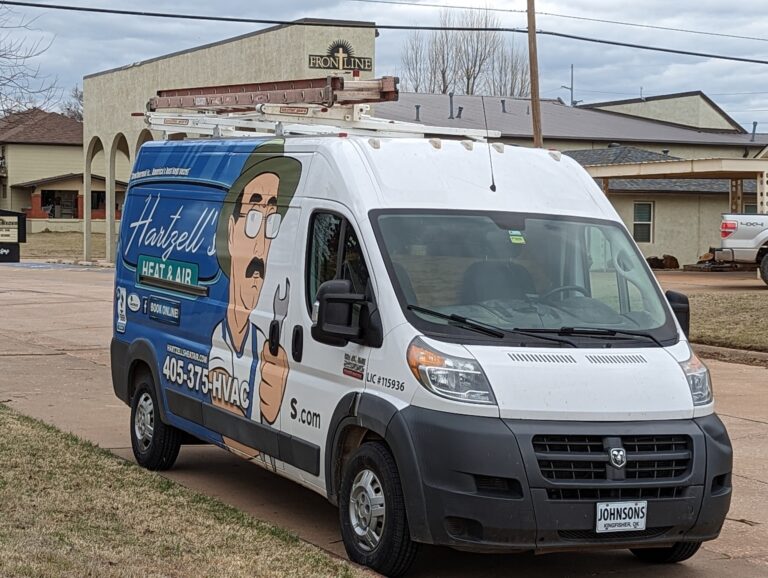
You already drilled the well. Let it heat the house.
On a place with a working water well, the same water can run the geothermal heat pump on its way to the stock tank and the pond. No loop field to trench, and the water does more than one job before it soaks back in. The trade calls it pump and dump. I call it using what is already in the ground.
Free Saturday and Sunday evaluation, consultation and sizing · Statewide for geothermal, as availability allows · IGSHPA Accredited · 4.8 stars, 300+ Google reviews
The water does three jobs on one trip
Most geothermal systems around here circulate the same sealed fluid through buried pipe forever. On a place with a good well, there is a second way: pull water up, run it through the heat pump once, and send it on to where the water was going anyway.
- The well brings it upA submersible pump lifts water the same way it does for the house and the tanks. The heat pump needs it flowing the whole time the compressor runs, so the pump has to be sized for that, not for a shower and a load of laundry.
- The heat pump borrows the temperatureGroundwater sits at a steady temperature year round. In winter the unit pulls heat out of it to warm the house. In summer it pushes heat into it. The water passes through the heat exchanger once. Nothing is added to it.
- The stock tank gets it nextThis is the part that makes a farm different. On most open loop jobs the discharge is a problem to solve. Out here the water has somewhere useful to be, and the tanks are already plumbed.
- The overflow runs to the pondTanks overflow the way they always have, and the pond catches it. Same water, same path, and it conditioned your house on the way through.
One straight answer about the windmill. A wind driven mill is a fine thing and it will keep a tank full, but it cannot feed a heat pump. An eight foot mill pumps somewhere between about 3 and 10 gallons a minute depending on cylinder and lift, and only while the wind is up. Below about 6 miles an hour it sits still. A 4 ton heat pump wants roughly 8 gallons a minute without stopping, every minute the compressor runs. So the well is the asset here, not the mill. The submersible feeds the heat pump, the windmill keeps doing exactly what it has always done, and both of them end up in the same tank.
What I check on your place
Open loop lives or dies on water. I would rather tell you no in the driveway than sell you a system that eats itself in year five.
- Sustained yield, not peakI pump the well for hours and watch the drawdown. A well that has served a house for twenty years is answering a different question than a compressor asks.
- Gallons per minute against the tonnageDesign range runs about 1.5 to 2 gallons per minute per ton, and the exact number comes off that unit’s spec sheet, not off a web page.
- Water quality and scaleIron, hardness, sand and hydrogen sulfide all go straight through the exchanger on an open loop. A lab test comes before the design, every time. What bad water does to a geothermal system
- Where the water legally goesStock tank, pond, return well or surface discharge. On a working place this is usually the easy half, but it still gets checked, not assumed.
- Winter behaviour at the tankDischarge water leaves the house cooler in heating season. Moving water and tank volume both matter, and so does what your livestock need in February.
- Pump sizing and the electric bill behind itLifting water is real work and it comes off the efficiency you bought. On a deep well I run that math before I recommend open loop at all.
- Whether the well recoversContinuous draw is a bigger, steadier pull than a household. Your neighbours are on the same aquifer, and that is a design input.
- The building, not just the houseShops and barns do not load like a house. Geothermal for a farm shop or barn
What I will not tell you on a web page
Oklahoma treats groundwater as belonging to the surface owner, and the Oklahoma Water Resources Board requires a permit for all uses except domestic use. Domestic use is defined to include household purposes and water for farm and domestic animals up to the normal grazing capacity of the land.
Whether running a heat pump off your well sits inside that domestic definition, on your ground, is not a thing I am going to decide for you in a paragraph. I check it with OWRB for your specific place before anybody drills a hole or changes a pump, and the discharge side can bring the Department of Environmental Quality into it too. Be suspicious of any contractor who quotes you a permit answer sight unseen.
Two things I can say plainly. Wells and pumps get installed by an OWRB licensed driller, and that is who does my drilling. And a well drilled for a non domestic use needs its authorization in hand before the bit turns.
Worth reading yourself: OWRB water permitting and OWRB groundwater use.
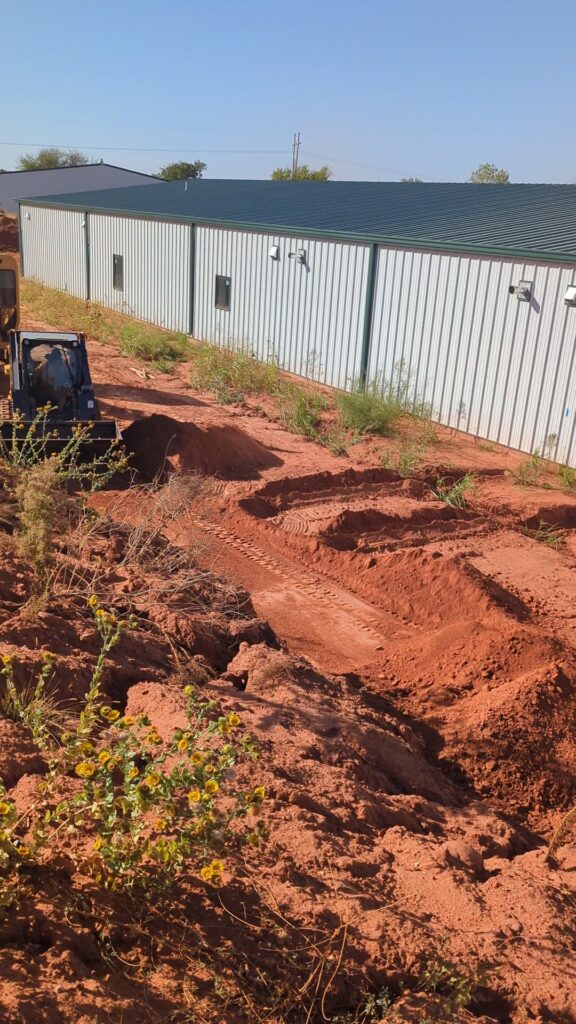
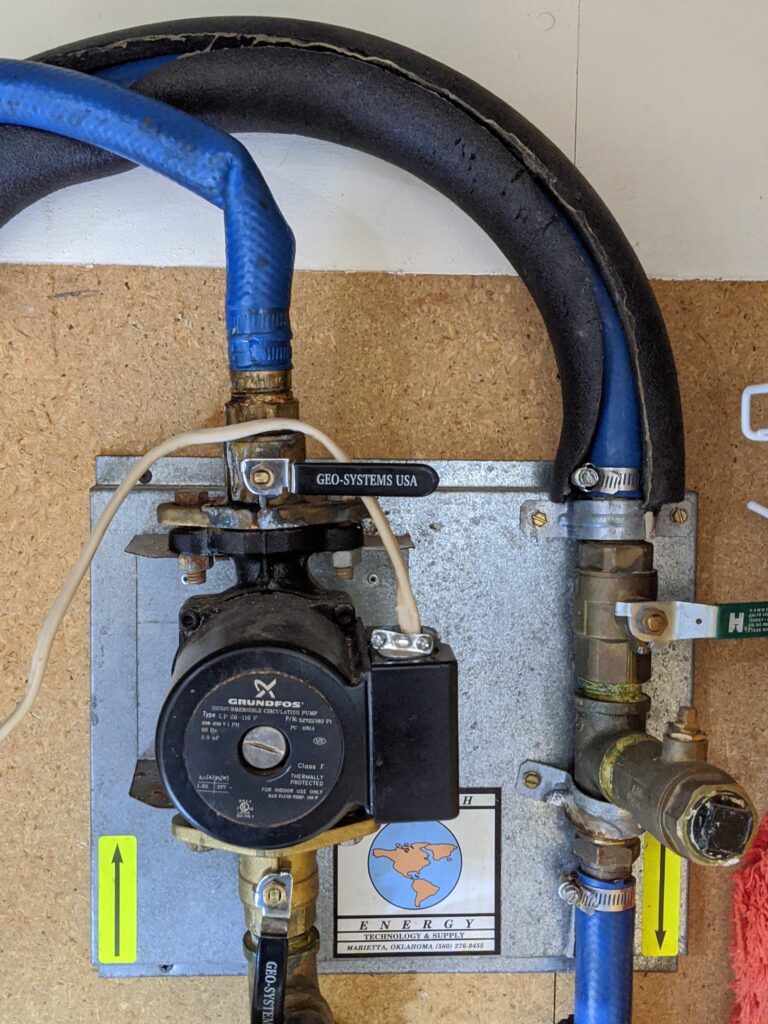
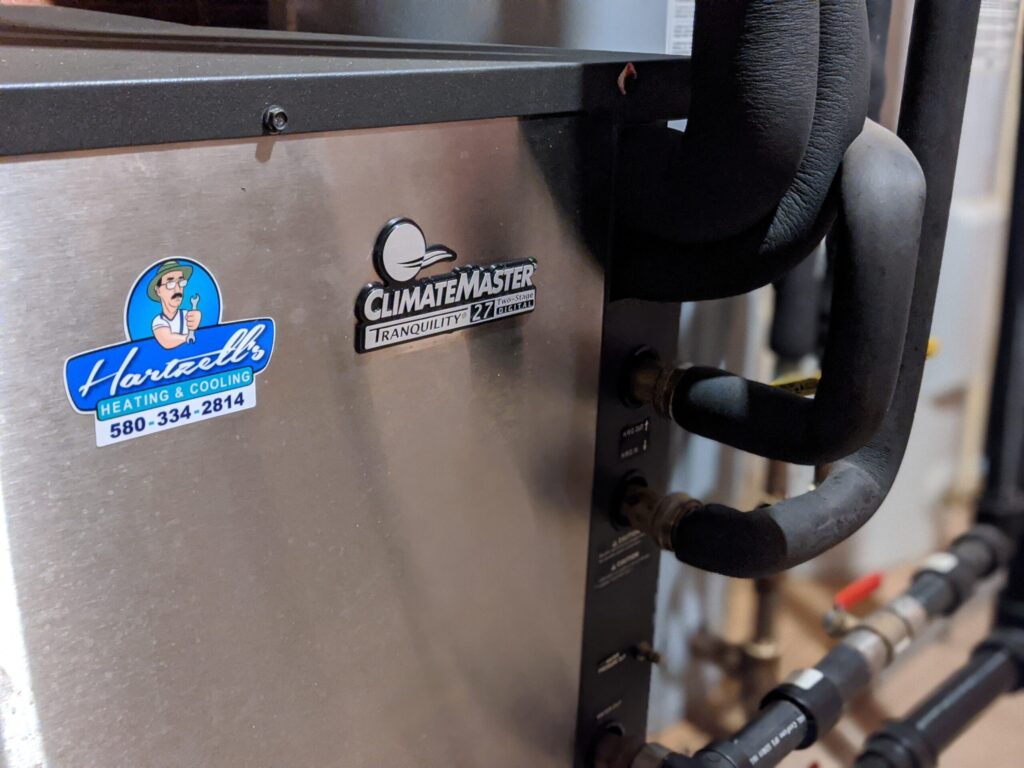
What this work looks like

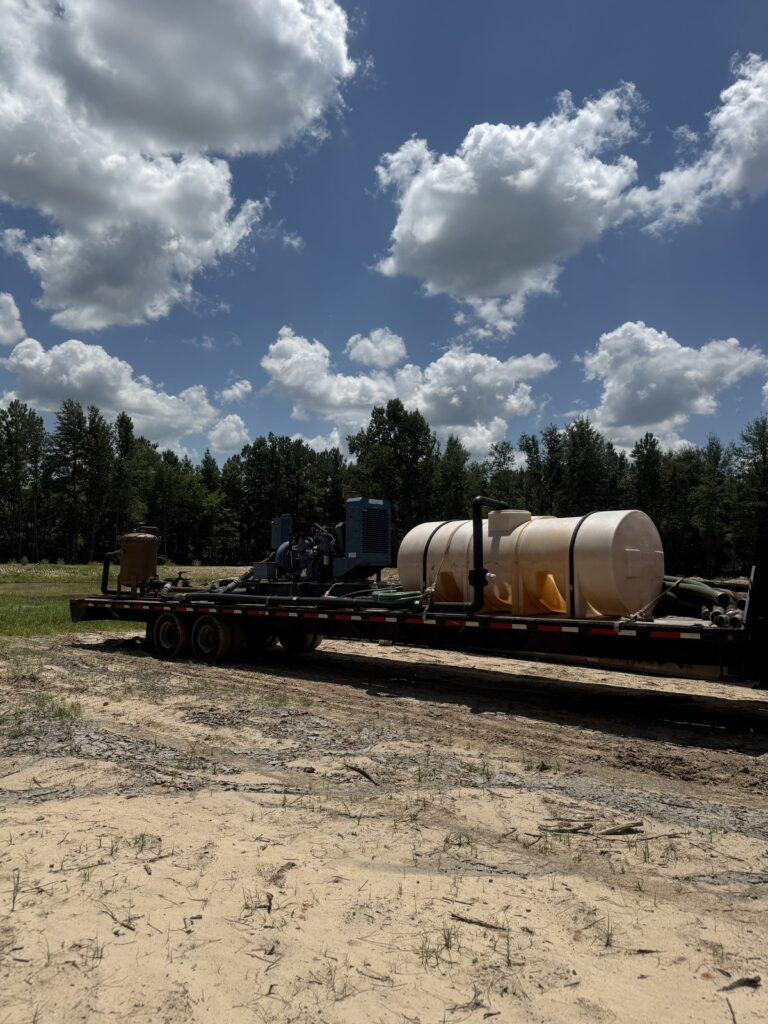
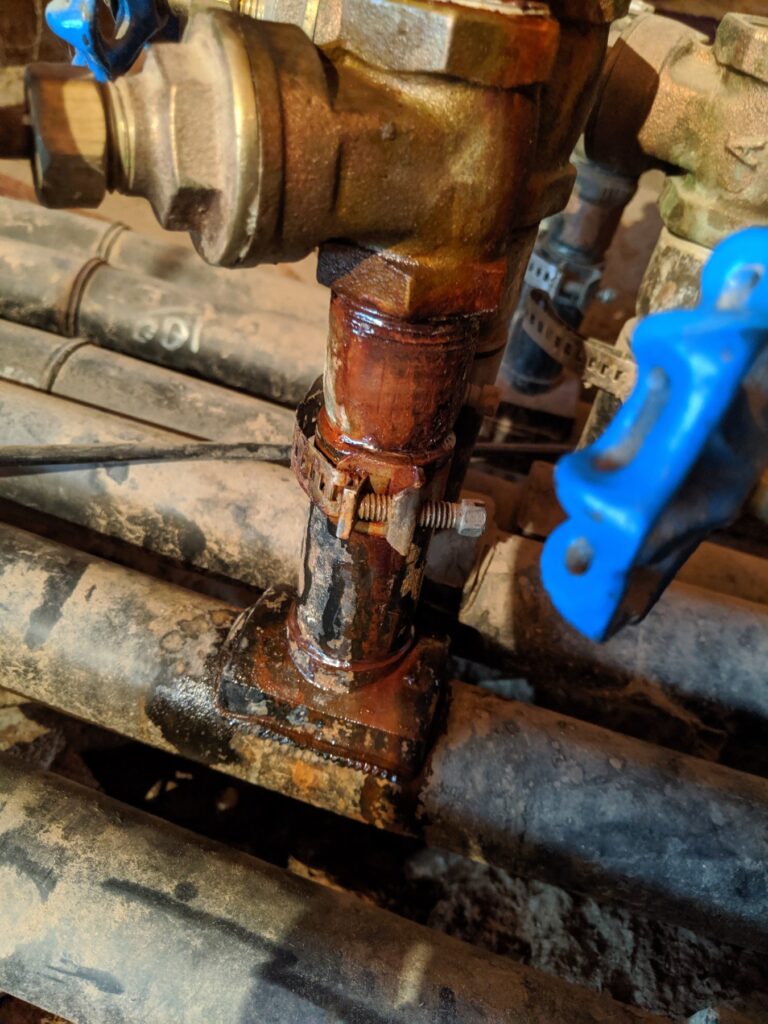
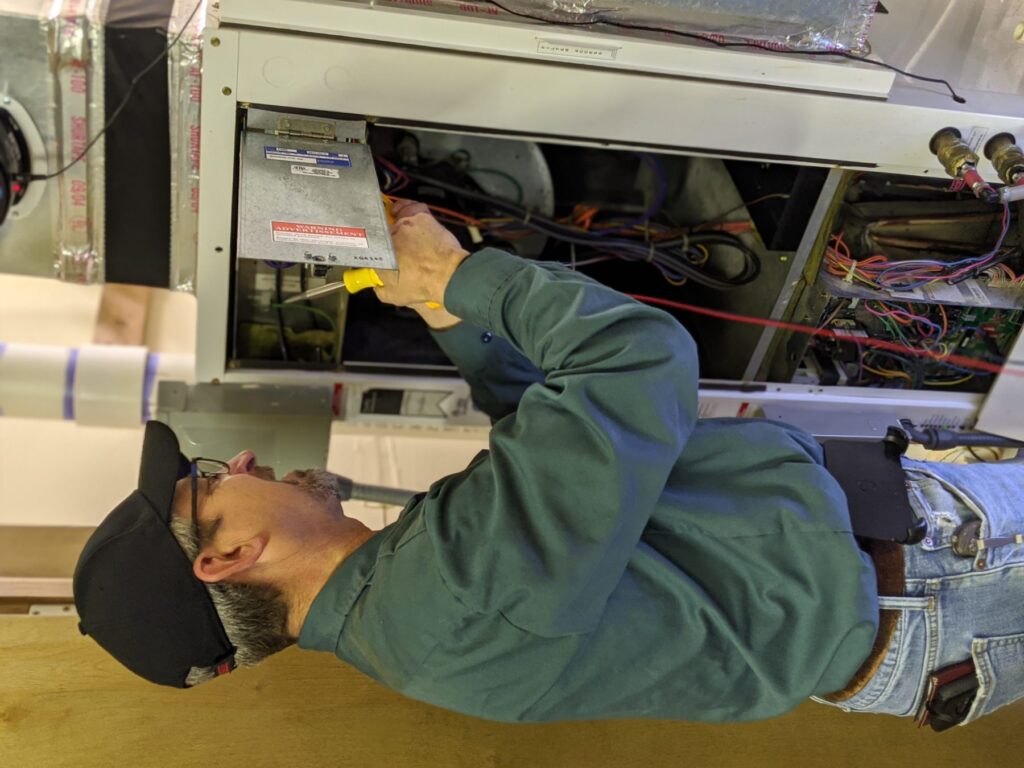
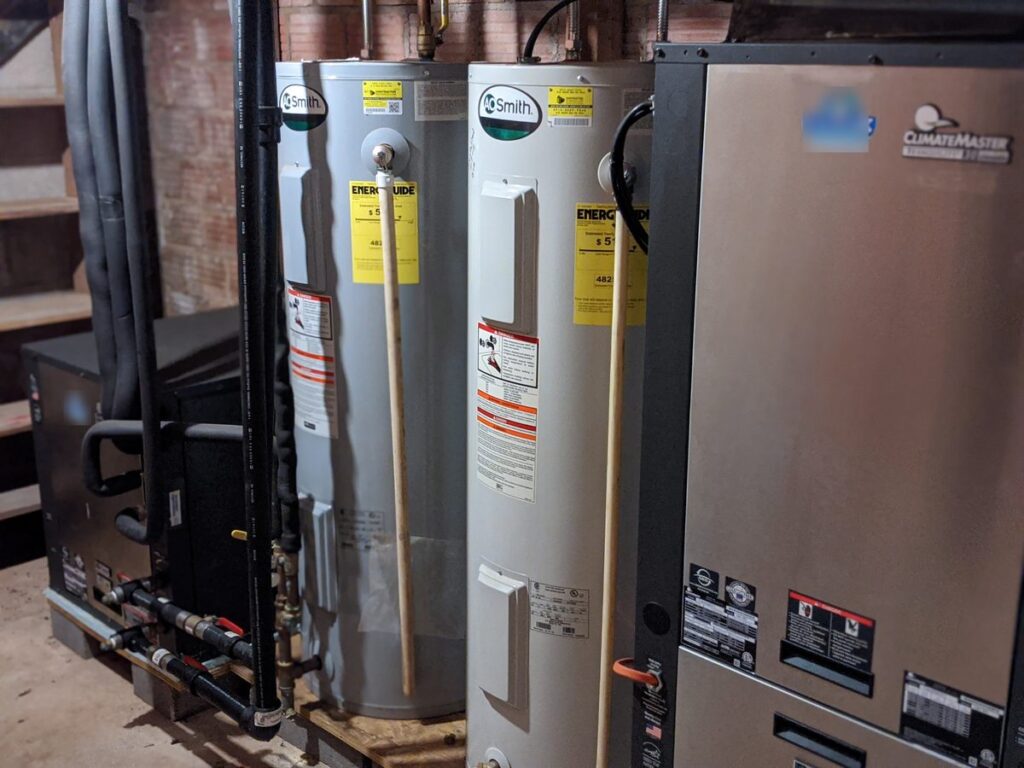
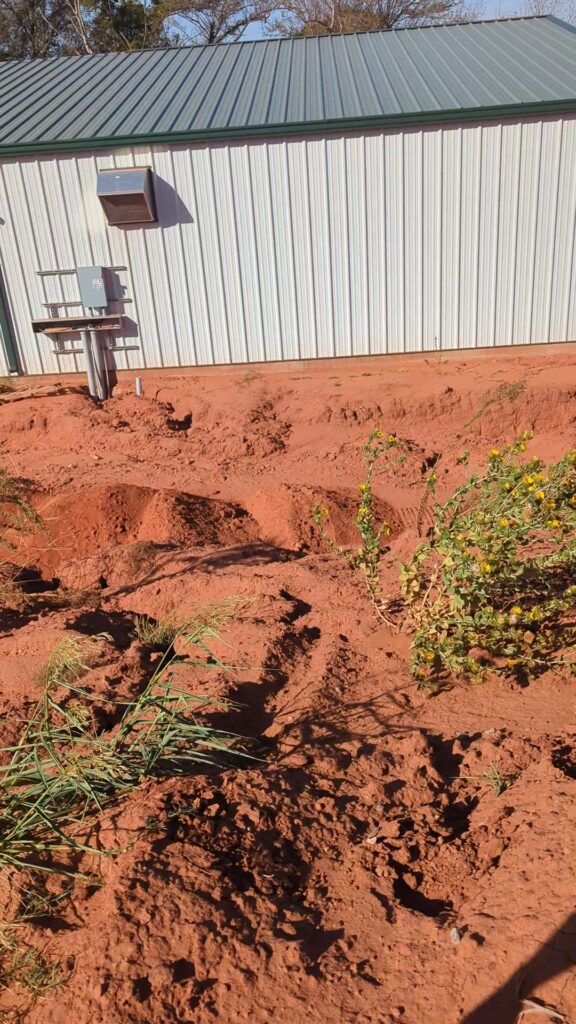
When this is right, and when I say no
Good well, stock to water
Strong sustained yield, clean water on the lab report, tanks and a pond already taking water, and a house or shop worth conditioning properly.
No loop field to trenchMarginal well
Yield that covers a house but not a compressor. Sometimes a second well or a different pump fixes it. Sometimes closed loop is simply the better buy on your ground.
Closed loop versus open loopBad water, deep lift
Hydrogen sulfide, heavy iron or hardness that will scale an exchanger shut, or a deep well where pumping cost eats the efficiency you paid for.
The full open loop decisionIf you would rather not own the equipment at all, geothermal is the one thing I offer on a lease. What geothermal costs per month.
Straight answers
Can my windmill run a geothermal system?
No, and I would rather say so up front. An eight foot mill pumps roughly 3 to 10 gallons a minute depending on cylinder size and how far it is lifting, and only while the wind is blowing. A 4 ton heat pump wants about 8 gallons a minute continuously, every minute the compressor runs. The submersible pump on your well feeds the heat pump. The windmill keeps filling the tank the way it always has.
How much water does a geothermal heat pump actually need?
Design range is about 1.5 to 2 gallons per minute per ton, and the exact figure comes off that unit’s spec sheet. A 4 ton system at 2 gallons per minute per ton wants 8 gallons a minute, sustained. That is why I test your well for hours instead of asking what it puts out.
Where does the water go after it leaves the heat pump?
On a farm, usually the stock tank, and then the overflow goes to the pond like it always has. The water is not changed, only its temperature. On places without livestock the options are a return well, a pond or surface discharge, and that is normally the half of an open loop project that stalls. Out here it is usually already solved.
Do I need a permit for this?
Maybe, and I check it rather than guess. Oklahoma requires an OWRB permit for all groundwater uses except domestic use, and domestic use is defined to include household purposes and stock water up to the normal grazing capacity of the land. Whether a heat pump’s draw sits inside that on your place gets confirmed with OWRB before anybody drills, and the discharge side can involve DEQ. Any contractor who gives you a permit answer without looking at your address is guessing.
Will the discharge freeze my stock tank in winter?
In heating season the water leaves the house cooler than it came out of the ground, so it is a fair question. Moving water, tank volume and where the line enters all matter, and so does what your animals need in February. I look at the actual tank before I design the discharge, not after.
What does it cost to find out if my well will work?
An estimate on a new system is free, and I now run free consultations on Saturday and Sunday: evaluation, consultation and sizing, no charge and no obligation. If you already have a geothermal system out there and something is wrong with it, a geothermal diagnostic is $348 flat, weekday or after hours, with a written report and a quote before I leave.
Do you come out this far?
For geothermal, yes. I travel most of Oklahoma for geothermal work as availability allows, not just my seven counties. Everyday air conditioning, heating and water heater calls stay inside Kingfisher, Canadian, Oklahoma, Garfield, Major, Logan and Blaine.
How long does a job like this take?
It depends on whether we are using the well you have or setting a new one, and on the building. Start now and the water side and the install still fit before Thanksgiving, where the schedule allows. Call and I will tell you straight what my calendar looks like rather than promise you a date I cannot hold.
Tell me about your well
Depth, what the pump is, how it does in August, and where your tanks and pond sit. I will tell you straight whether the water on your place can carry a heat pump, and I will tell you if it cannot. Running a shop, a store or a business building instead? That is commercial geothermal, and the tax side is different.
Call 405-375-4822Geothermal statewide as availability allows. Home ground: Kingfisher, Canadian, Oklahoma, Garfield, Major, Logan and Blaine counties.