
15+ years • 6,500+ jobs completed • 1,500+ Oklahoma homes served
Geothermal HVAC in Northwest Oklahoma
4.8 stars, 300+ Google reviews
I am Dave Hartzell, and I have been working on heating and cooling in Central and Northwest Oklahoma for 47 years. I started as a kid holding the flashlight for my dad while he worked on air conditioners, and I have been around ground-source systems long enough to tell you the truth about them: geothermal is the best comfort system you can put in a Northwest Oklahoma home, and it is also the one most likely to be sold wrong.
This page is for homeowners in Kingfisher, Blaine, Major, Garfield, Canadian, Logan, and the surrounding counties who are weighing a ground-source heat pump. I am going to give you the real picture: how the loop behaves in our soil, what our summers and winters actually demand, what the rebates are worth in 2026, and where the money goes.
4.8 stars / 300+ reviews · IGSHPA Accredited · ClimateMaster GeoElite Dealer · Master HVAC License
Why geothermal fits Northwest Oklahoma
The whole idea is simple. Four or five feet down, the ground around Kingfisher holds a steady temperature in the mid-60s all year. A ground-source heat pump moves heat to that stable ground in summer and pulls heat out of it in winter, instead of fighting a 105-degree July afternoon or a 10-degree January morning the way an air-source unit does. That stable starting point is why a properly installed geothermal system runs at efficiencies an air-source heat pump cannot touch in our climate.
Our region has two things that make geothermal pay off: brutal cooling loads from May through September, and enough acreage on a lot of rural and semi-rural lots to put in a horizontal loop without a big drilling bill. If you are on a few acres outside Kingfisher, Okeene, Watonga, or Hennessey, you often have room for the cheaper loop option that a city lot in OKC does not.
Loops and our soil: what actually goes in the ground
The loop is the part nobody sees and the part that makes or breaks the system. There are two common ways to do it here:
- Horizontal loop: trenches dug several feet deep across the yard. Cheapest option when you have the land. Good fit for rural Northwest Oklahoma lots.
- Vertical loop: boreholes drilled straight down, used when the lot is tight or the soil is too rocky to trench economically. Costs more because of the drilling, but takes far less surface area.
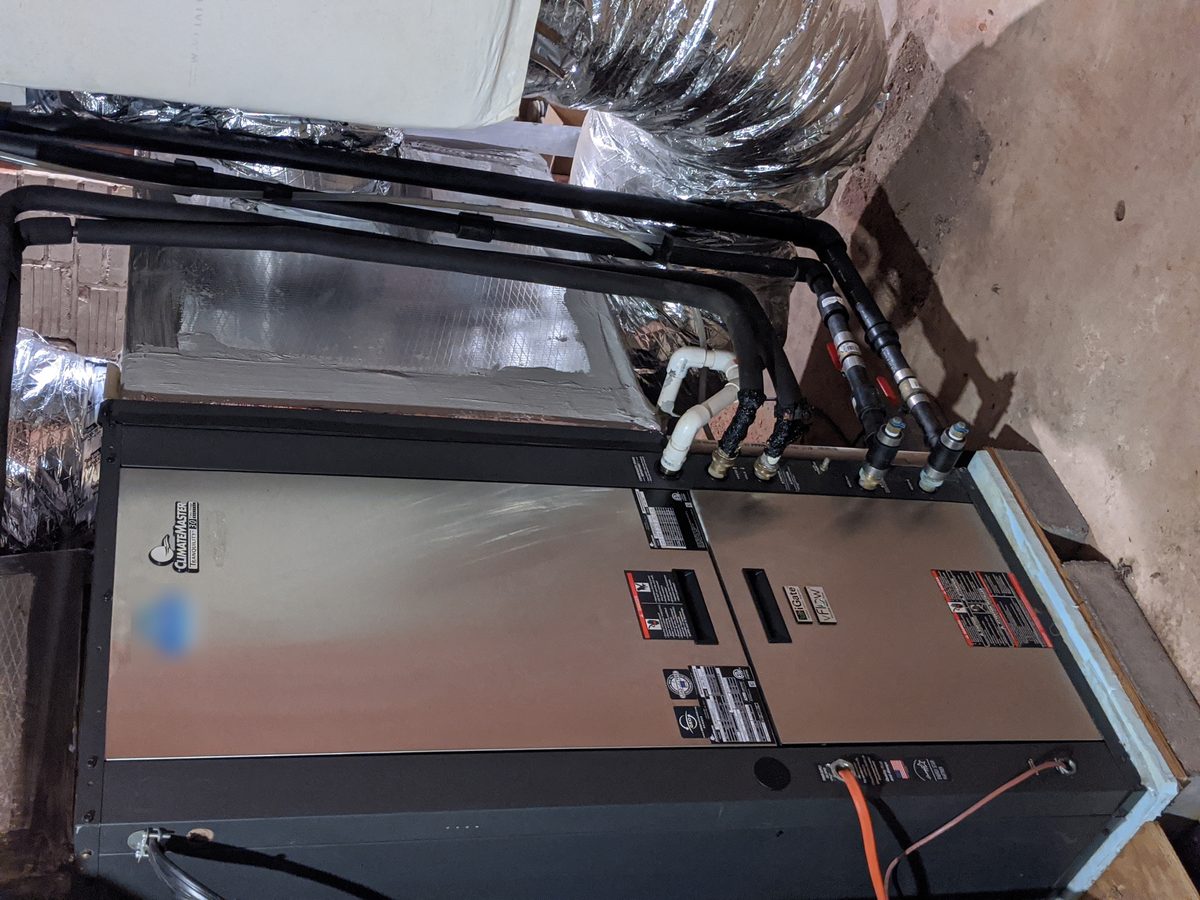
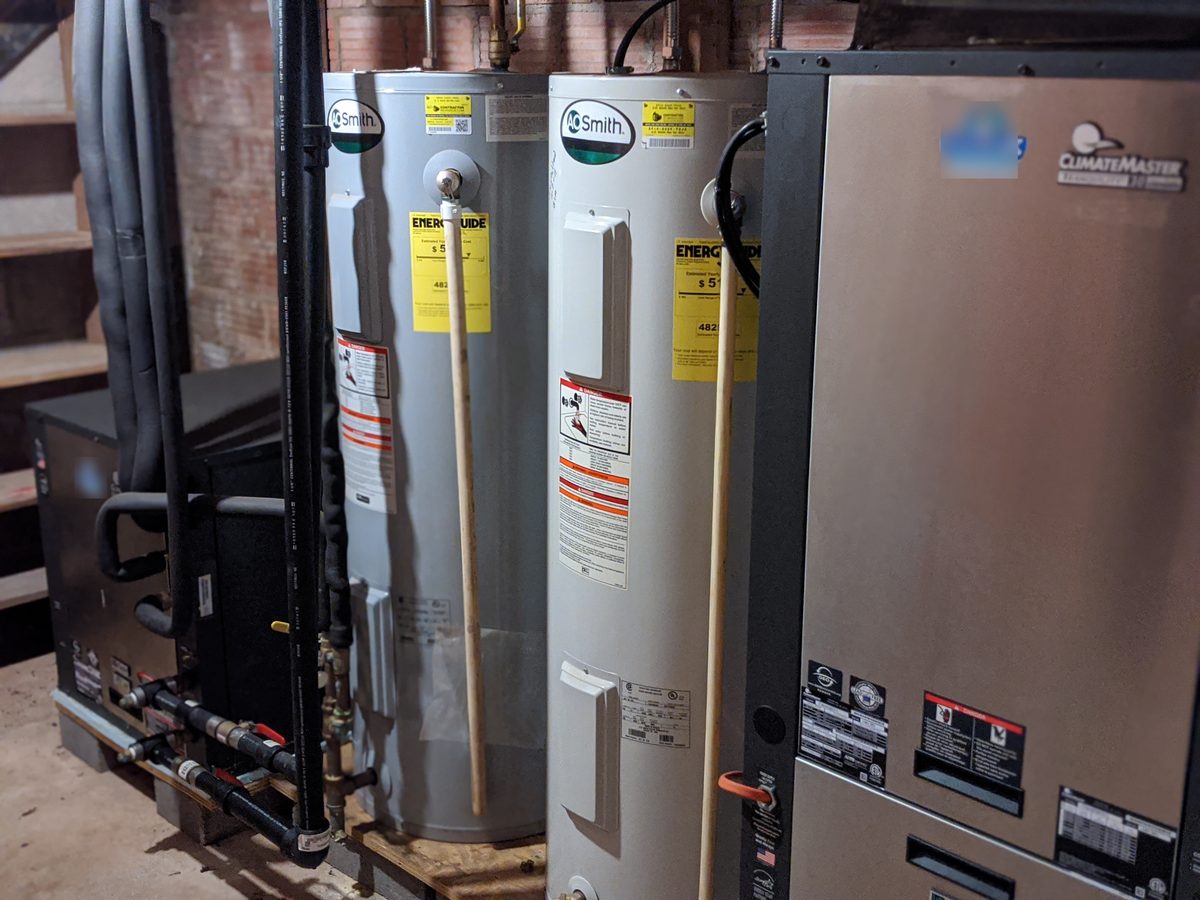
Our soils out here are not uniform. You will hit heavy red clay in a lot of spots, sandier ground near the river bottoms, and shale or rock in others. Clay actually transfers heat to the loop well when it stays moist, but it shifts and can stress a loop field over the years. That ground movement is one of the most common reasons an older geothermal system in this area starts underperforming. I size the loop for the worst case our climate throws at it, not the brochure case. Here is a real one. About 20 years ago I sold a family near Okeene a 14-SEER air conditioner and a propane gas furnace, and years later they called me back to replace the whole thing with geothermal. That kind of 20-year relationship is the part I am proudest of, and the propane is a big reason the geo made sense. Propane runs expensive out in rural Oklahoma, and a ground-source system slashes the run cost compared to feeding a propane furnace all winter. On their property I went vertical even though there was land for trenching, and the red clay is exactly why. Drilling the bores straight down puts the heat exchange below the near-surface clay that shifts and dries out. The loop sits in stable, steady ground instead of riding the seasonal movement that wears out a shallow field. I set that home up with two ClimateMaster Tranquility geothermal heat pumps, sized so the lighter zone gets a smaller unit and the main load gets the larger one, and neither runs oversized. Both units carry hot water generators, which pull waste heat off the system to help heat the home’s water as a byproduct. In our cooling season, when the system is rejecting heat anyway, that takes a real bite out of the water-heating bill.
The equipment I install
I am a ClimateMaster GeoElite dealer and IGSHPA Accredited for ground-source work. ClimateMaster builds the units I trust for Oklahoma homes, and I also service the older brands already in the ground around here. The line I install is the ClimateMaster Tranquility geothermal heat pumps, which are a strong fit for our climate and the load profile of a Northwest Oklahoma home. Most residential jobs out here land in the 2 to 5 ton range, and the right tonnage depends on your home’s actual heat load, not a rule of thumb. On the Okeene job above I ran two ClimateMaster Tranquility units together so each zone got the size it needed and neither unit ran oversized.
2026 rebates: real numbers, county by county
This is where I have to be blunt, because a lot of folks have been told wrong. Do not let anyone quote you a deal that depends on it.
Some Oklahoma utilities publish geothermal rebate programs, but I verify the current utility source and the service address before treating any rebate as real:
- CKenergy: CKenergy currently publishes $2,000 per ton for qualifying geothermal installations, capped at $24,000 per member, subject to CKenergy rules and meter eligibility. CKenergy source.
- OG&E: amount withheld here until a current official utility source is verified for the service address.
- OEC (Oklahoma Electric Cooperative): verify current amount and eligibility by service address before quoting.
- Cimarron Electric: verify current amount and eligibility by service address before quoting.
- KPWA (Kingfisher city utility): verify current availability, amount, and eligibility by service address before quoting.
I will pull your actual utility and tell you what you qualify for before we ever talk price. For the full breakdown, see my Oklahoma geothermal rebates 2026 guide.
What it costs and how people pay for it
Geothermal is not the cheap option up front, and I will not pretend it is. The payoff is in the operating cost and the system life. Here is how my pricing works on the service side:
- Free estimates on new geothermal installs.
- Geothermal-specific diagnostics are $348 flat when water-source testing is needed. Repair work is quoted before approval.
- Financing available through Synchrony, Wells Fargo, Wisetack, Klarna, and JB Financing. Financing covers installs, repairs, and maintenance plans, not just new systems.
For a worn but salvageable geothermal system, I separate loop condition from equipment condition before recommending replacement. A rebuild, loop repair, or full replacement is quoted only after testing confirms the loop, flow center, controls, and heat pump condition.
Okeene is on my regular run, and the Okeene geothermal case study is an honest one: I completed the job, the service history is there, and I did not publish the specs I could not prove.
Keeping a geothermal system honest: the Geo 360 plan
A ground-source system needs different maintenance than a furnace and condenser. Loop pressure, flow, and the desuperheater all matter. Current Geo 360 maintenance options are Geo One Visit Spring or Fall 360 at $360/year, Geo Spring and Fall 360 at $428/year, and Geo Full Year 360 at $499/year.
Geothermal diagnostic data Dave checks
A geothermal repair is not just a thermostat guess. The current geothermal diagnostic is $348 flat when water-source testing is needed. I quote repair work before I start.
| System side | Data point | Why it matters |
|---|---|---|
| Loop | Loop pressure, flow/GPM, entering and leaving water temperature, freeze protection | Separates loop, pump, air, or water-side trouble from a refrigerant guess. |
| Indoor heat pump | Airflow, static pressure, electrical draw, controls, coil condition, refrigerant-circuit behavior | Shows whether the unit can safely move the heat the loop is delivering. |
| Homeowner safety | Visible alarm code, mode, auxiliary heat status, water location, sounds and smells | Useful observations do not require opening panels, loops, valves, refrigerant circuits, or unsafe spaces. |
Related: safe homeowner geothermal questions and geothermal maintenance measurements.
Frequently Asked Questions
Does geothermal really work in Northwest Oklahoma’s climate?
Yes, when the loop field and equipment are sized for the home. Geothermal uses ground temperature instead of outdoor air as the heat-exchange path, which can help in Oklahoma heat, but I verify loop design and operating data before making performance claims.
Will CKenergy’s geothermal rebate cover my home in Kingfisher County?
Not if you are in Kingfisher County. CKenergy serves Blaine, Custer, and several other Northwest Oklahoma counties, but not Kingfisher County. If you are in Kingfisher, look at Cimarron Electric, KPWA, or OG&E depending on your meter. I confirm it for you.
Horizontal or vertical loop for my property?
If you have the land, usually a few acres on a rural lot, a horizontal loop is cheaper because we trench instead of drill. On a tight lot or rocky ground, a vertical loop costs more but uses far less surface area. I look at your soil and your lot before deciding.
How much does a geothermal system cost in Oklahoma?
It is usually not the cheapest option up front, so the right answer depends on the home load, loop option, utility, and long-term plan. Estimates are free on new installs. Service calls are quoted before approval; geothermal-specific diagnostics are $348 flat when water-source testing is needed. Financing is available through Synchrony, Wells Fargo, Wisetack, Klarna, and JB Financing.
Related reading
- Geothermal heat pump installation and service overview
- Geothermal heat pump installation in Oklahoma
- The complete guide to geothermal heat pumps in Oklahoma
- Oklahoma geothermal rebates 2026
- HVAC services in Blaine County
- HVAC services in Major County
Talk to me before you spend a dollar
I am Dave Hartzell. I will tell you straight what your system needs and what it does not. Free estimates on new installs; service repairs are quoted before approval, and geothermal-specific diagnostics are $348 flat when water-source testing is needed.
Call 405-375-4822
Book online at hartzellsheatair.com
Hartzell’s Heat & Air, 602 S Main St, Kingfisher OK 73750