
What Geothermal Drilling Looks Like in Your Yard
If you want to see what the drilling would mean for your yard before you commit, ask me. I design and size the loop, and my licensed driller does the drilling.
4.8 stars, 300+ Google reviews. IGSHPA Accredited. Estimates on a new system are free.
I am Dave Hartzell. 47 years in HVAC, 15+ years running Hartzell’s Heat & Air out of Kingfisher, IGSHPA accredited on the geothermal side. What stops most people from buying geothermal is not the price. It is the drilling.
So here is the whole thing, in order. If your question is whether the lawn survives, I answered that at will geothermal tear up my yard. This page is the walk-through: what shows up, what happens at each hole, and what you are looking at when the trucks leave.
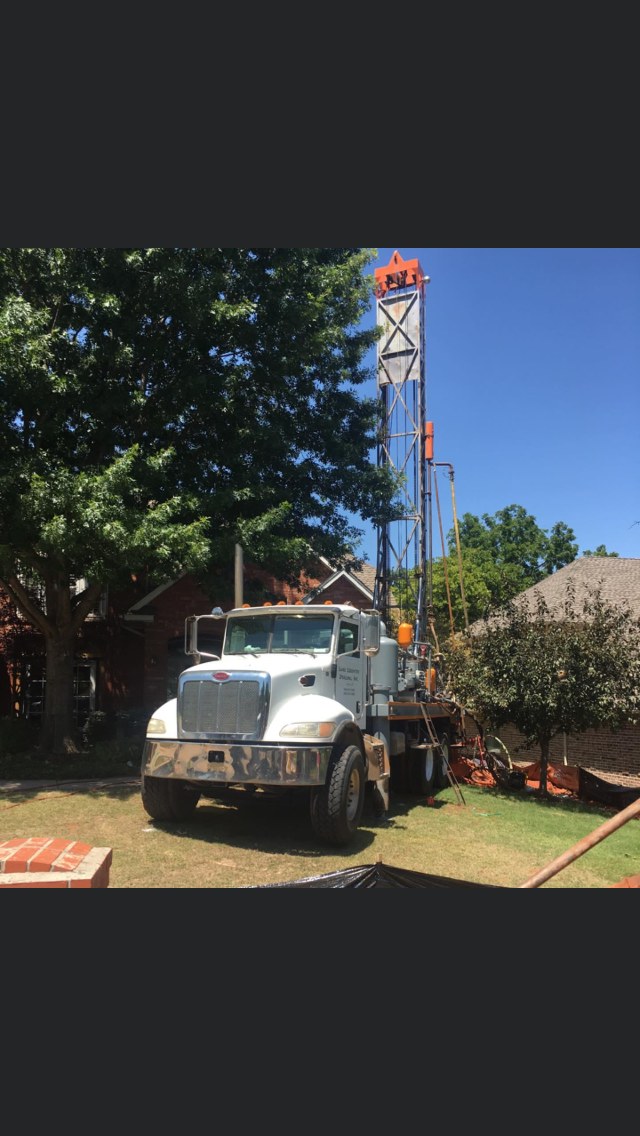
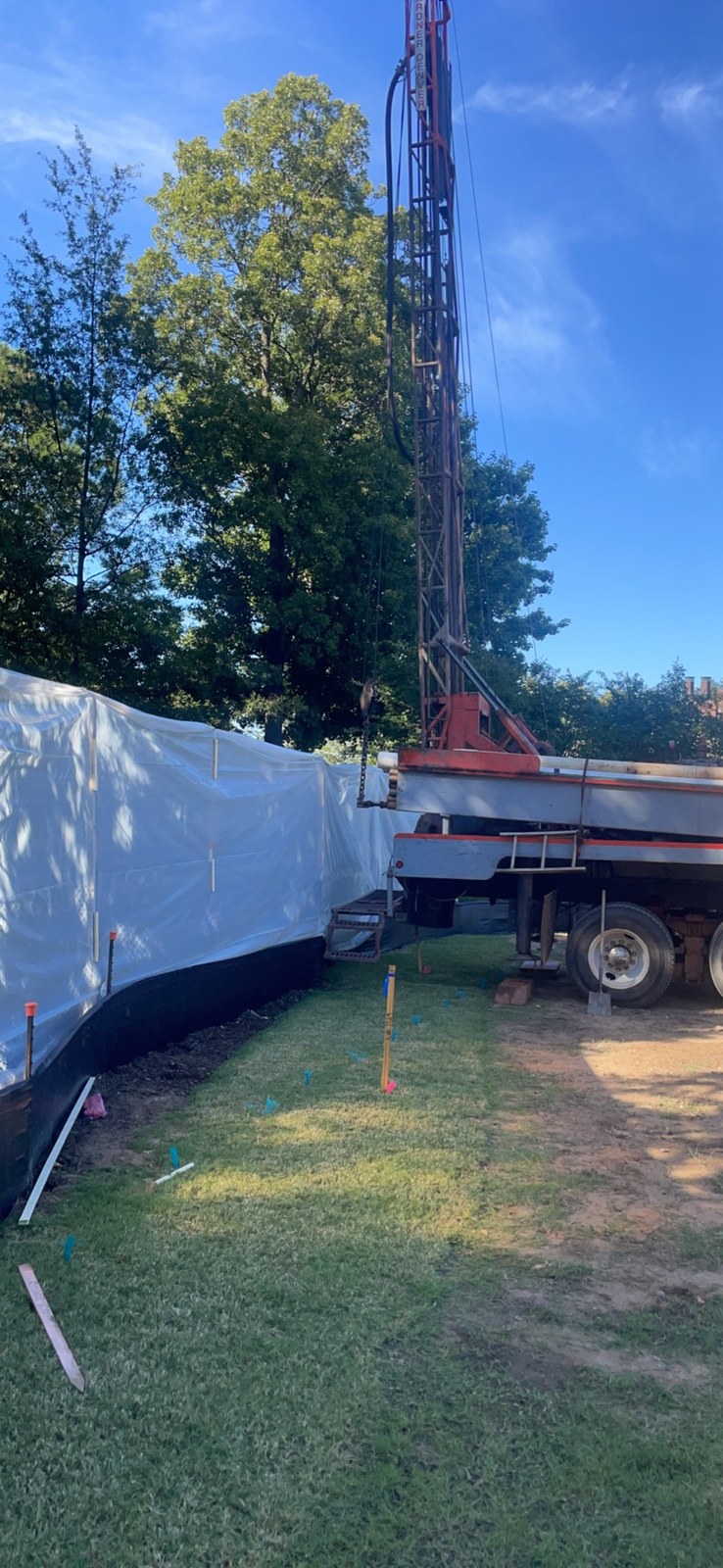
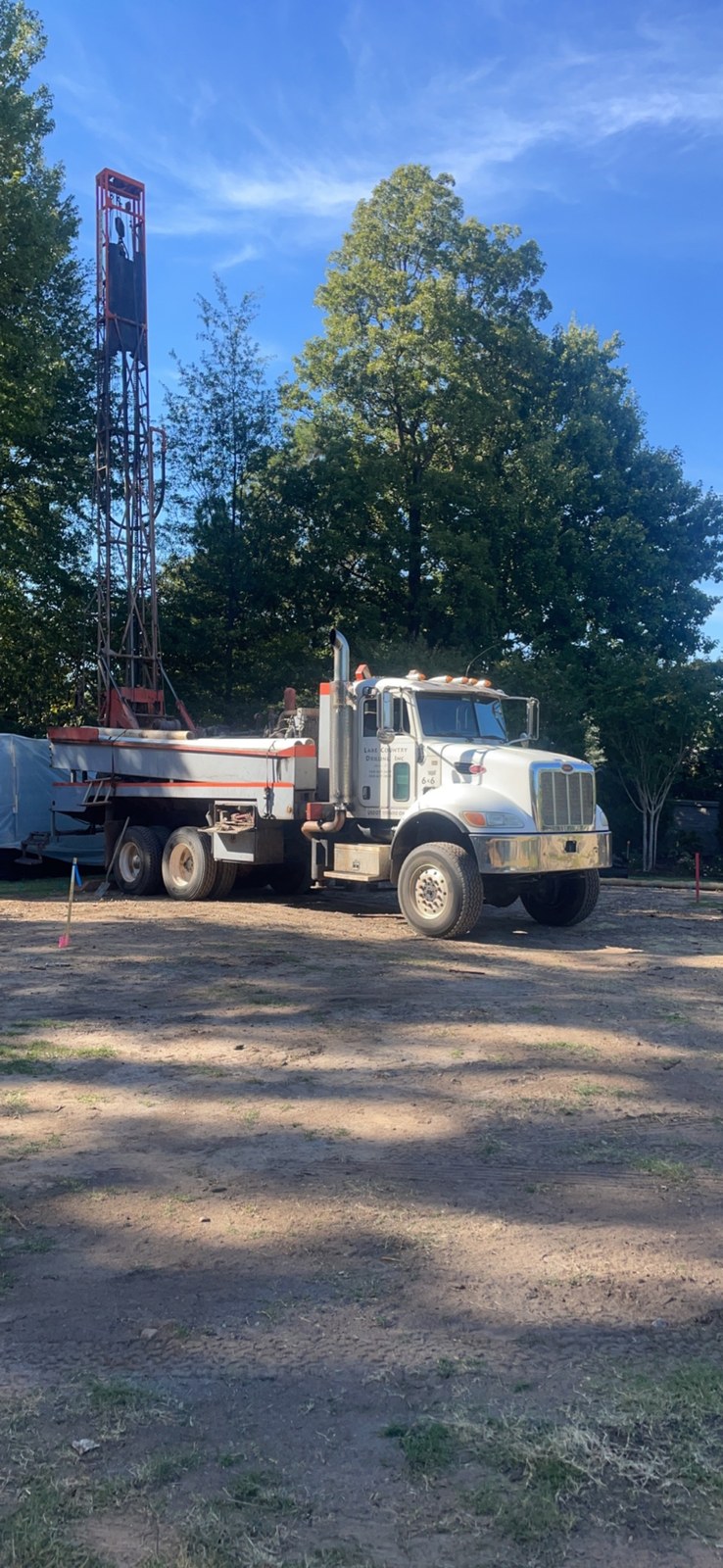
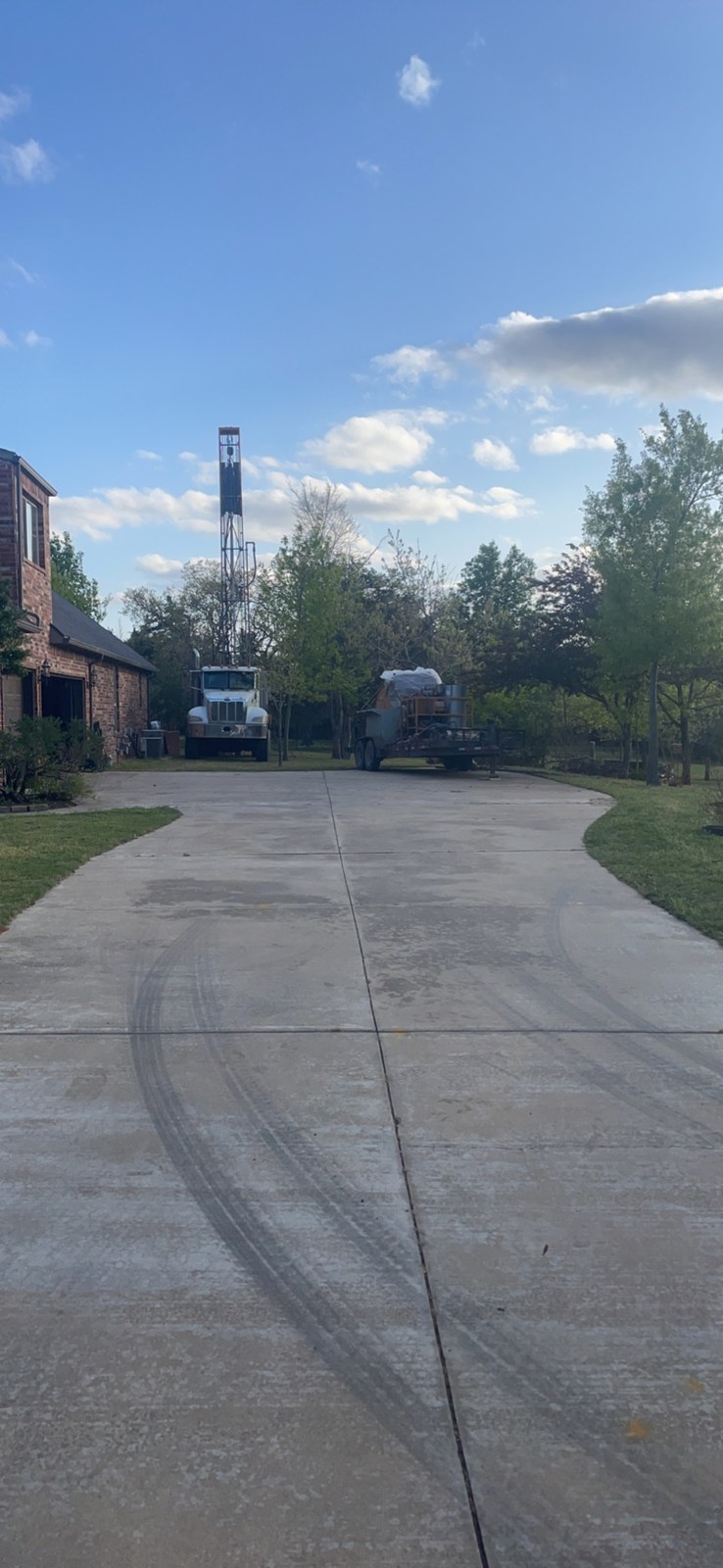
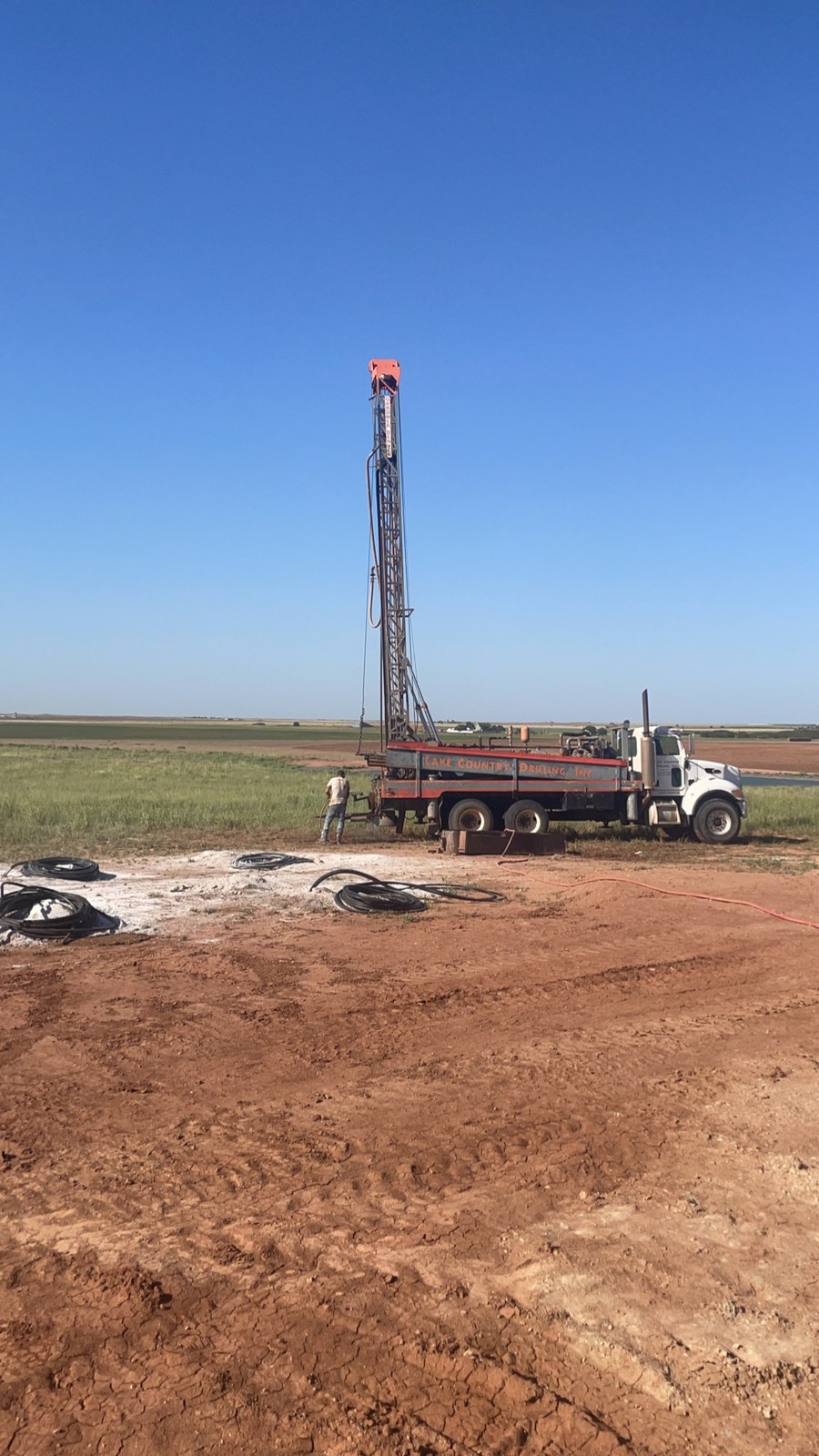
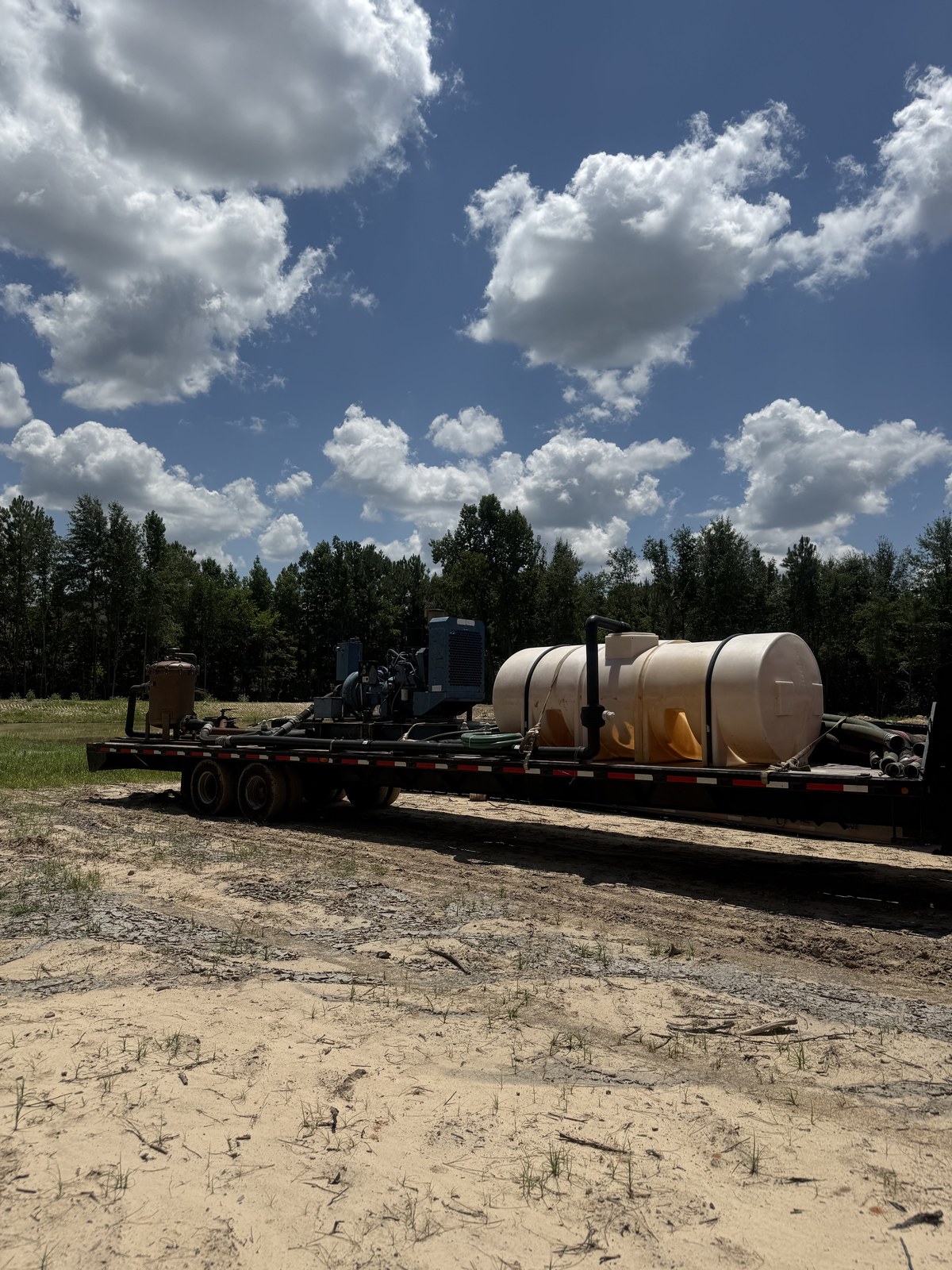
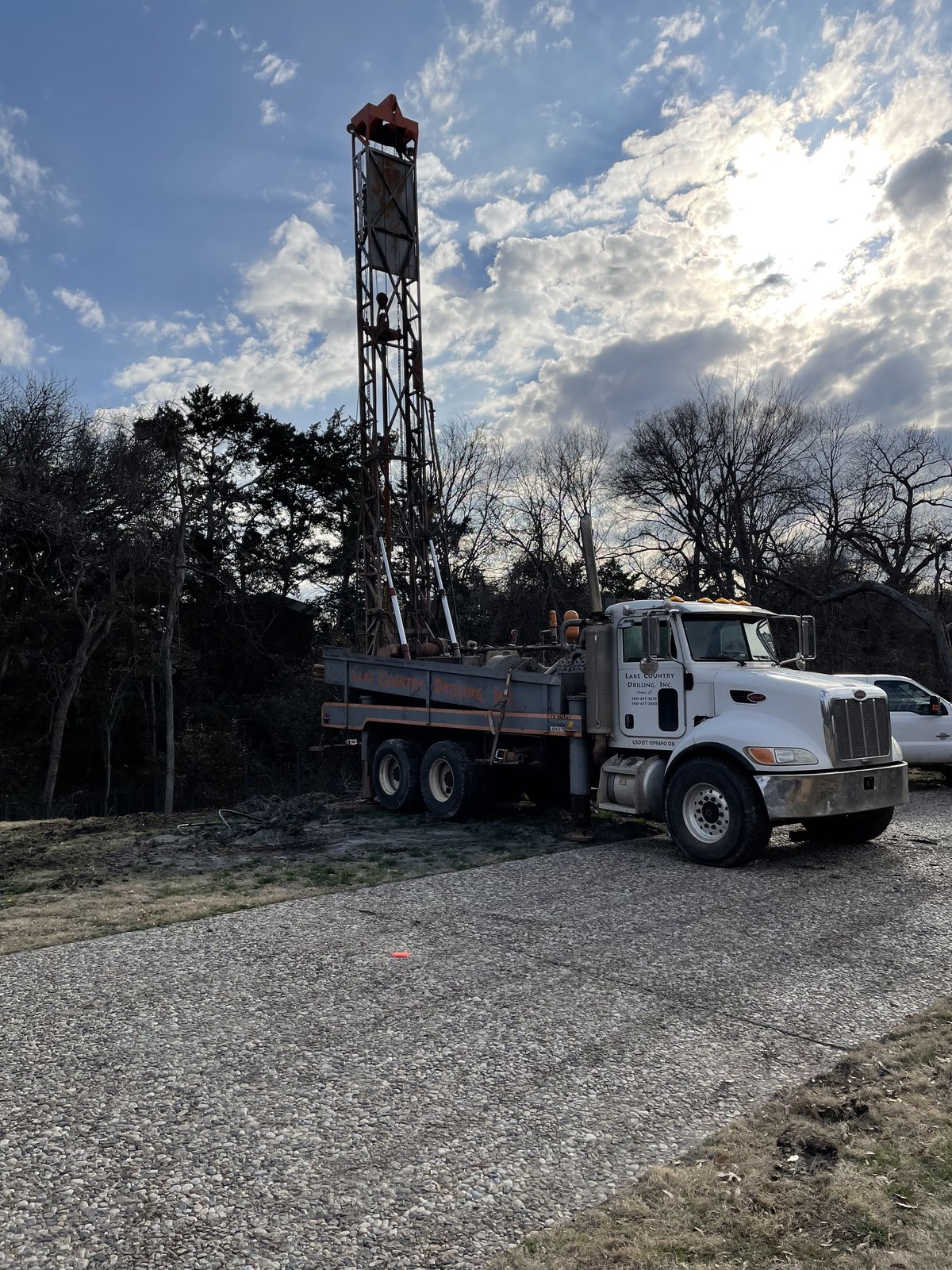
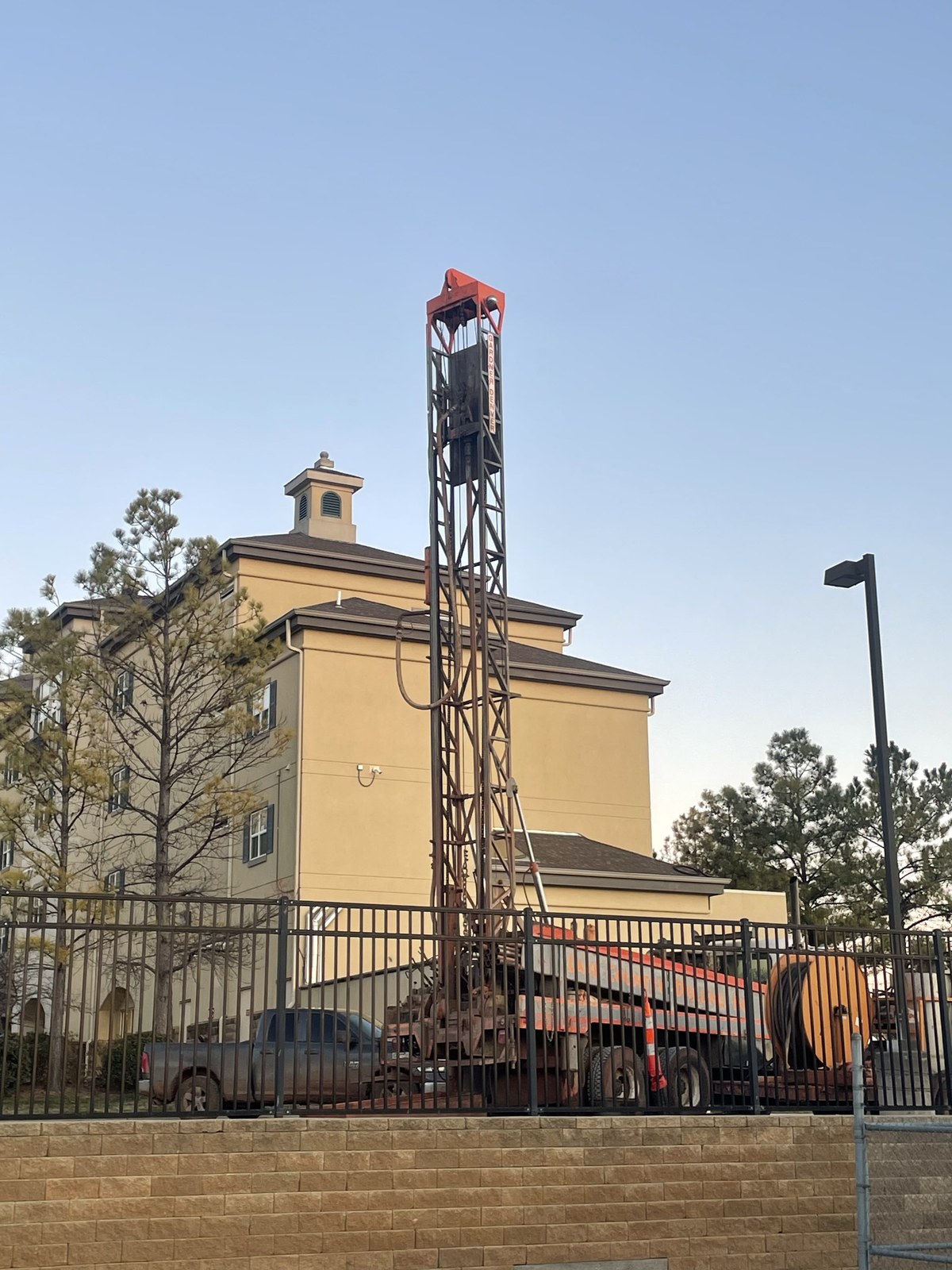
Geothermal Drilling Photos From The Field
These photos show drilling rigs, support equipment, and loop-field conditions that help explain the scale of vertical bore work.
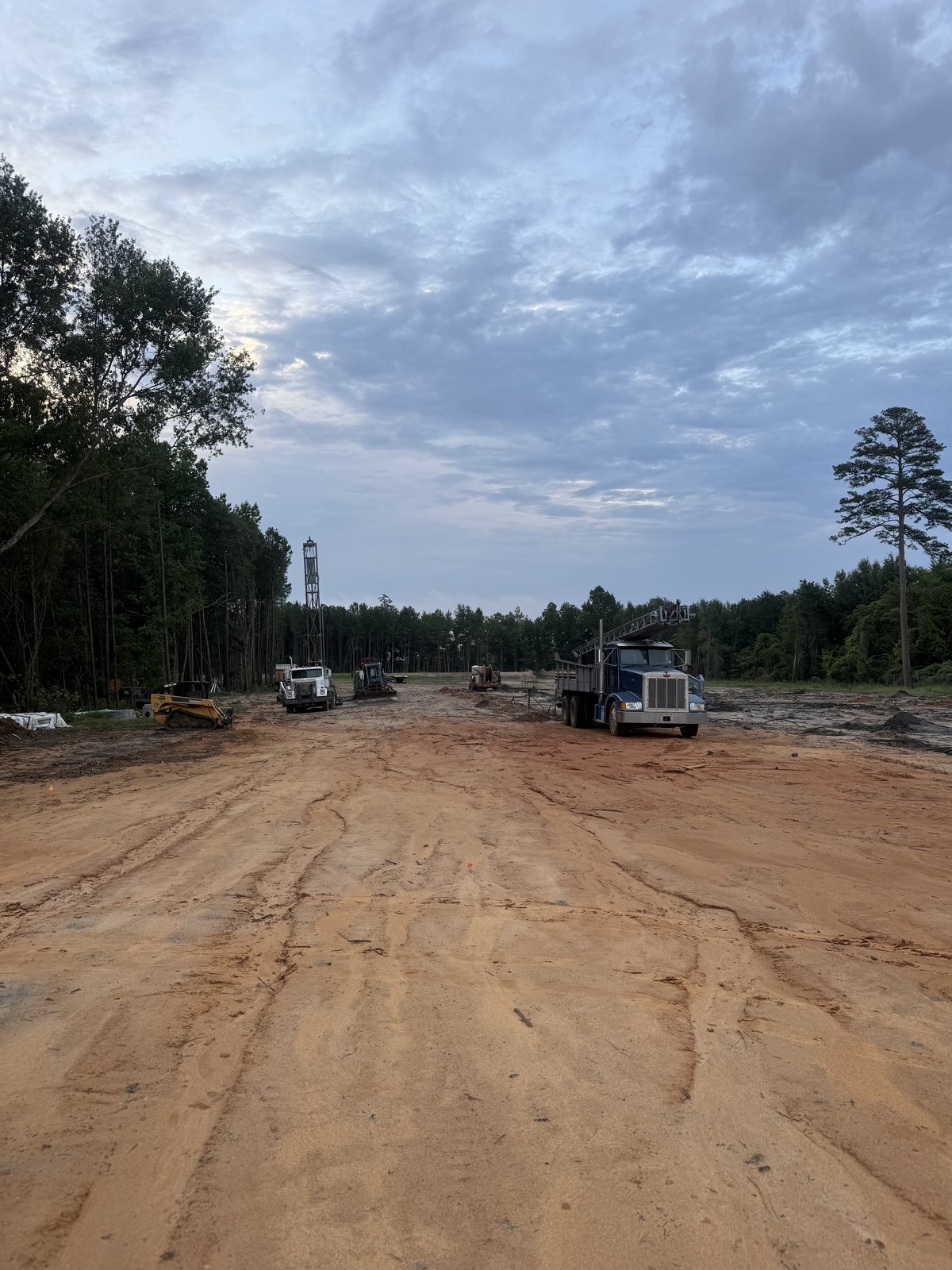
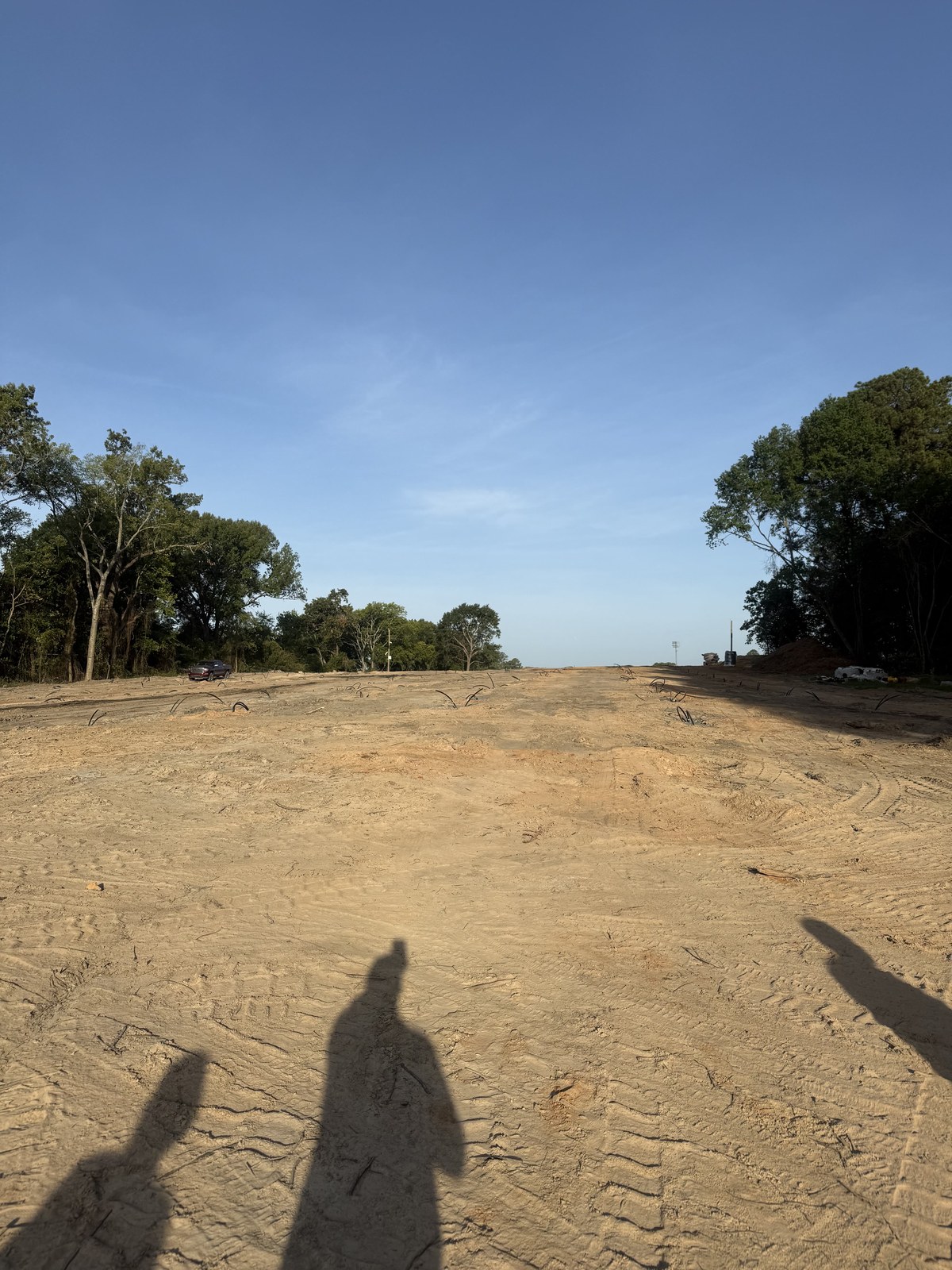
What actually shows up at your house
Four things, and you should know them before drilling day.
- The drilling rig. The piece everybody pictures, and the biggest thing on the property.
- A support truck. Loop pipe, tooling, fusion equipment, grout material. The rig alone does not do the job.
- A water supply. Drilling uses water. Where it comes from gets settled before the crew pulls in, not in your driveway.
- A spoils containment area. A staged spot where the material out of the hole is collected on purpose, instead of running loose across the yard.
On footprint, a description rather than a measurement. The rig needs room to set up and level over each hole, the truck has to sit close enough to work from, the containment area needs its own space, and there has to be a path between bores that does not cross your landscaping. Where the equipment can physically reach decides the loop layout more than the math does, and I settle that on the walk.
All of that is decided before a rig shows up. The loop design inputs I confirm before drilling is the list that has to be settled first.
What happens at each bore, in order
Every hole gets the same five steps, in sequence, not on a clock.
- Position. The rig is set over the marked spot and leveled. Not level, not a straight hole.
- Drill. The material out of the hole goes to the containment area, not onto the grass.
- Set the loop. High density polyethylene pipe, already fused at the bottom into one continuous U, goes down the hole with both legs coming back to the surface.
- Grout. The hole is sealed from the bottom up, and that is next.
- Move. The rig repositions and does it again.
That is one bore. A system is more than one, and how many comes from the load calculation on your house and what the ground is at your address, not a rule of thumb. That is why every job starts with a geothermal site analysis.
Grouting is the step nobody asks about, and it is the one that matters most
With the pipe in it, the hole is still not full. Left that way you get two problems you never see.
First, groundwater. A borehole passes through more than one layer of ground. Left open, it becomes a shortcut between layers that were never connected, and anything at one depth can travel to another. Grout seals it. State grouting requirements govern this and I follow them.
Second, and this decides whether your system works: a pipe sitting in a hole with air around it does not transfer heat. Air insulates. The whole premise is that the loop is in real thermal contact with the ground, and grout makes that contact. Without it you paid for a loop wearing a jacket.
Grout goes in from the bottom of the hole upward, so it fills the whole column and pushes everything ahead of it. Filling from the top down bridges and leaves voids behind, and a void is exactly what you were paying to avoid.
If a geothermal bid comes in well under everybody else, this is one of the places the money comes out. You would never catch it.
Yes, it makes a mess while it is happening
Better you hear it now than find out on a Tuesday morning. Drilling water plus the material out of the hole equals mud. That is not a sign anything went wrong.
Containment and staging is what gets done about it. Spoils go to the area set aside for them, and the work stays inside the footprint laid out with you. Some material can be worked back in on site. The rest gets hauled off, and haul off is quoted per site, because it depends on what comes out.
How they get tied together is a design decision made long before drilling day. Borefield depth, spacing, headers, and flow is where that gets worked out.
The bores get tied together and fused into one piece
The legs from each hole do not run into the house separately. They get routed into a header trench and joined by heat fusion: the pipe ends are melted and pressed together so the joint becomes the same continuous piece as the rest of the run.
That word matters. Not clamped, not glued, not threaded. No gasket to dry out and no fitting to back itself off, because there is no fitting. Then one pair of pipes comes into the house, and the rest of it is what happens on geothermal installation day.
That pressure test has a standard behind it. HDPE fusion, pressure testing, and loop flushing is the detail version of what happens before the trench closes.
Nothing gets buried until it holds pressure
Before any dirt goes back, the loop is flushed, purged of air, and pressure tested. It has to hold. If it does not, it gets fixed while it is still lying open.
I will not print a test pressure or a hold time here. Those come from the pipe and the design on your job. The rule is what I commit to: the loop is proven before it is covered. That is the difference between a cheap fix and an excavation, and a big part of why a loop keeps leaking.
Restoration, and I am not going to oversell it
Some comes back fast, some on its own schedule, and some does not come back at all. You deserve all three answers before you sign.
- Comes back quickly: the staging area and the drive path, once regraded. Minor rutting where the ground was firm.
- Comes back on its own schedule: turf over the trench and the bore locations. Grass regrows when grass decides to, and that depends on the season, what the yard is planted with, and whether it gets watered. I will not put weeks on your lawn.
- Does not come back: a mature tree that had to come out, or landscaping in the only path the rig can take. I say so on the walk, while it is still a choice.
The piece genuinely on me is backfill compaction. Loose backfill settles, and shows up two years later as a sunken stripe across a lawn. That is workmanship, not geothermal.
For a job where the wells were drilled as part of the project, a two-system geothermal install in Piedmont is the closest thing I have to a walkthrough of a multi-system property.
Vertical or horizontal changes what your yard goes through
Vertical bores take a small amount of surface area and go down. Horizontal loops are shallower and open up much more of the yard at once, which sounds worse and often is not, because it recovers as one area. Full comparison: horizontal vs vertical vs pond loop in Oklahoma, and the fluid side is at closed loop vs open loop.
Geothermal is a premium purchase, and the drilling is part of why. It costs more up front and earns it back in decades of much lower energy use.
Geothermal, anywhere in Oklahoma
Geothermal is the one thing I go statewide for. I have run jobs out of Kingfisher, Okarche, Hennessey, Watonga, Dover, Loyal and Cashion, through Crescent, Piedmont, Edmond, Yukon, Mustang, El Reno and Guthrie, out to Enid, Geary, Okeene and Fairview, into Oklahoma City, and as far as Lawton, Broken Bow and Durant. One shop, here in Kingfisher, and I drive to you.
Questions people ask before drilling day
How deep do you drill for geothermal in Oklahoma?
That is set by your job, not by a standard number, so I will not print one. What decides it is the heating and cooling load on your house, what the ground is at your address, how much open area you have, and the loop design that comes out of those. You get a real figure after the analysis.
Why does a geothermal borehole have to be grouted?
Two reasons. It seals the hole so it cannot become a path between ground layers that were never connected, which protects groundwater, and it puts the pipe in solid contact with the earth so heat transfers. A loop in an air gap does not work. Grout goes in bottom up so no voids are left.
How much does a geothermal diagnostic cost in Kingfisher Oklahoma?
$348 flat, any hour, weekday or after hours. That is a full performance check with a written report and a quote before I leave. An estimate on a new geothermal system is free, and that visit is where the drilling gets planned.
Call 405-375-4822
Let me walk your property and show you where the rig goes. Estimates on a new geothermal system are free. Geothermal diagnostic $348 flat, any hour.
IGSHPA Accredited and Master HVAC licensed. Geothermal is serviced statewide across Oklahoma.
4.8 stars, 300+ Google reviews. 15+ years in business, 47 years in the trade.