
What Is a Ton of Geothermal?
4.8 stars, 300+ Google reviews
A ton of geothermal is 12,000 BTU per hour of heating or cooling capacity.
It has nothing to do with weight. A three ton geothermal system moves 36,000 BTU per hour, and it needs
roughly 1,200 feet of loop pipe in the ground to do it.
4.8 stars, 300+ Google reviews
The word is a leftover from the ice trade. A ton of capacity was once literally the cooling you would
get from melting a ton of ice in a day. The name stuck a hundred years after the ice did.
Why a geothermal ton is not the same conversation as a furnace ton
With a furnace and air conditioner, sizing is an indoor question. How big is the house, how leaky, how
much glass, which direction does it face. That is what a Manual J load calculation answers, and I run one
free on every install. Read
how the Manual J works.
With geothermal, every ton you add has a second cost that people do not see coming: it has to come out
of the ground, so every ton needs its own share of loop. Figure on roughly 400 to 600 feet of loop pipe per ton for a straight horizontal loop
as the planning number, more if the trench goes slinky. Three tons is about 1,200 to 1,800 feet. Five tons is about 2,000 to 3,000 feet, and that is either
a lot of trench or several more bores.
That is why an oversized geothermal system is a worse mistake than an oversized furnace. On a furnace
you wasted some money and you short cycle. On geothermal you also paid for hundreds of extra feet of pipe
buried in your yard forever.
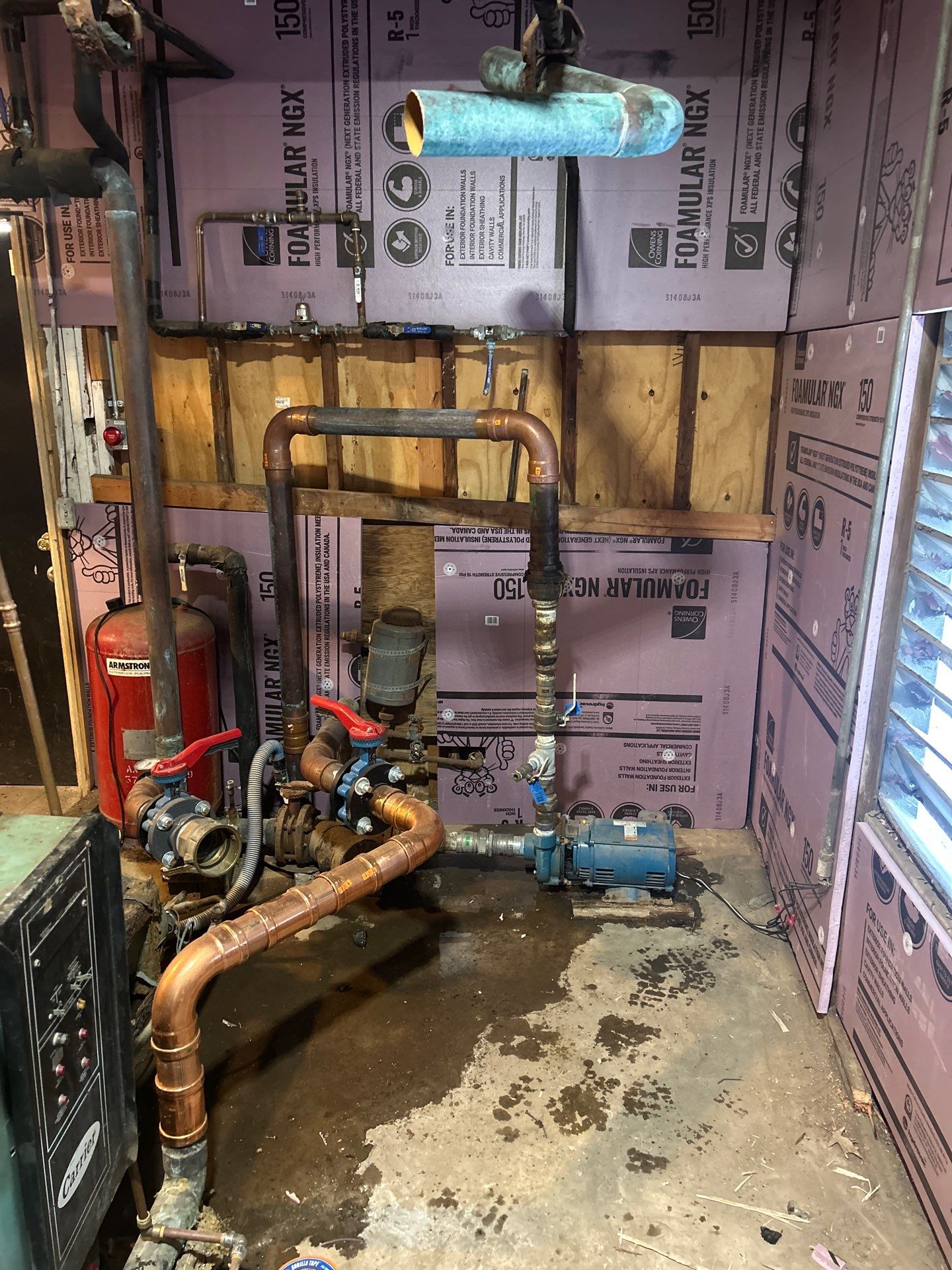
At the big end, a three-floor lake home I ran the load on came out at 8.83 tons net, and the cooling side is what got it there.
What tonnage actually looks like on Oklahoma houses
Most of the homes I put geothermal in around Kingfisher, Hennessey, Okarche, and out toward Watonga
land in the three to five ton range. Bigger rural houses with a lot of glass and a walkout basement can
push past that. A tight, well-insulated new build can surprise people by needing less than they assumed.
I have also walked into houses running a five ton system that only ever needed three and a half. It
short cycles, it never pulls the humidity out, and the owner has been paying for it for a decade. Guessing
big is not being safe. It is just being wrong in a more expensive direction.
What a ton costs you, and what it saves you
The dollar version
Tonnage is the single biggest driver of what a geothermal system costs, because it sets both the
equipment size and the loop length. That is why I will not quote a geothermal price over the phone. Until
someone has done the load calculation, a price is a guess with a dollar sign on it.
Tonnage also drives your rebate. Several Oklahoma utility geothermal rebates are paid per ton, so the
size of your system directly changes the check you get back. CKenergy pays per ton in its counties, and
there are others. The verified list is on my
CKenergy rebate counties page and my
geothermal cost page. I do not quote a rebate I have not
confirmed is active.
On the saving side, ENERGY STAR certified geothermal heat pumps
are on average over 45% more energy efficient than standard options, and right sizing is how you get the efficiency you paid for. Energy use, not your entire electric bill.
Three tons is the right answer more often than people expect. A 3-ton ClimateMaster job in the Canton area is the write-up that shows why the load picked the size, not the square footage.
How I land on a number
Manual J load calculation on your actual house, then equipment selection against that load, then loop
design against the equipment, then I check the ductwork can carry the airflow before I promise anything.
Skip any one of those four and the tonnage on the invoice is fiction.
If you want to play with it yourself before I come out, there is a
system sizing page and a
geothermal savings calculator on the site. They are
for orientation, not for ordering equipment.
Questions I get about this
How many tons of geothermal do I need for a 2,000 square foot house?
Square footage alone cannot answer that, and anybody who answers it from square footage alone is guessing with your money. Insulation, windows, ceiling height, orientation, and duct condition move the answer by more than a full ton. I run a free Manual J and give you the real number.
How many feet of loop per ton of geothermal?
Plan on roughly 400 feet of loop pipe per ton. Horizontal fields spread that out in trenches, vertical fields stack it in bores. The exact figure moves with soil conditions, which is why I look at your ground before I design the field.
Is a bigger geothermal system better?
No. Oversized geothermal short cycles, pulls humidity poorly, and makes you pay for loop you did not need. Right sized beats big every time on a heat pump.
Does 1 ton equal 12,000 BTU on geothermal too?
Yes. A ton is 12,000 BTU per hour of capacity whether it is geothermal, air-source, or a straight air conditioner. What changes is how the machine produces it and what it costs to run.
Can I add a ton later if I finish the basement?
Sometimes, and it is much easier if we plan the loop for it up front. Adding capacity later usually means adding loop, and adding loop after the yard is finished is the expensive way to do it. Tell me your plans at the estimate.
Keep going:
Want the real tonnage for your house?
I will run the Manual J, design the loop against it, and show you the number and where it came from. New system estimates are free, and for geothermal I travel across almost the entire state of Oklahoma, depending on the customer and the project.
Dave Hartzell, Hartzell's Heat & Air, 602 S Main St, Kingfisher, Oklahoma. Master HVAC License, NATE Certified, IGSHPA Accredited, ClimateMaster GeoElite. New system estimates are free, and for geothermal I travel across almost the entire state of Oklahoma, depending on the customer and the project. Diagnosing an existing geothermal system is my $348 flat Geothermal Diagnostic, no credit and no refund, with a written report before I leave.